Showing posts with label nintendo r&d1. Show all posts

Saturday, February 28, 2026

Platform Game Compilation Review: Donkey Kong Classics


Donkey Kong Classics compiles the Nintendo Entertainment System ports of the first two Donkey Kong arcade games, Donkey Kong and Donkey Kong Junior, into one multicart. 

As noted above, the two most popular games in the original trilogy were both included, which is great since they were the best in the series up to the time of this multicart's release in 1988. It does not include Donkey Kong 3, which likely contributed to that game becoming lesser known than the others.

Donkey Kong was a solid conversion of the arcade game. However, since it was also an early release before mappers extended the capabilities of the Nintendo Entertainment System, it lacks the cement factory stage. That stage would not be added to the Nintendo Entertainment System version until Donkey Kong Original Edition was released for the Virtual Console for Wii in 2010 and Nintendo 3DS in 2012.

Donkey Kong Junior, on the other hand, survives in-tact in its conversion from arcade to NES. Although it was also an early NES game, all of the levels are here. The only real difference, as with Donkey Kong, is the change from a vertically-oriented arcade monitor to the horizontally-oriented, nearly square resolution of the NES hardware.

The multi-cart has one small difference in the games. The title screen in both games are replaced by a single blue Donkey Kong Classics title screen. The games can be selected via the right and left buttons on the NES controller, and the number of players can be selected via a menu below the game select area. The neat thing about this change is that the title screen music from the two games are alternatingly played on the multi-cart's title screen.

Donkey Kong Classics is an interesting compilation of the Nintendo Entertainment System conversions of the first two Donkey Kong games. Unlike Nintendo's earlier multi-carts, such as the Super Mario Bros. / Duck Hunt pack-in cartridge, the menu is not silent. The games lack title screens, in favor of a single title screen that controls the options of both games. This isn't a bad thing, especially since the title screen music from the both games are alternated on the multi-cart menu. It's a shame that Donkey Kong 3 wasn't included, but the game was the weakest of the original trilogy, so its exclusion is not a big loss.

Final Verdict:
3 out of 5

Saturday, February 14, 2026

Arcade Platform Game Review: Popeye

Valentine's Day is here, so what better arcade game to celebrate the day than Popeye? It is the arcade game that Nintendo designer Shigeru Miyamoto was finally able to create after the plans to make a game based on the Popeye series earlier fell apart and was reworked into Donkey Kong. The Popeye we did receive doesn't quite reach the heights of Mario's premiere, but does have its own charm.

The graphics capture the look of the characters quite well. The sprites are large and expressive, and the animation is well done. This is especially true of the animation of Bluto reaching under a platform to try to knock Popeye into the water. That's still the image that immediately pops into my head decades after the game was released. It's just that well animated.

Like the Popeye comics and shorts that inspired it, Popeye tries to earn the love of Olive Oyl while avoiding the aggression of the competitor for Olive's heart, Bluto. Olive Oyl throws out hearts, and Popeye catches them. When the hearts completely fill up the Popeye-tagged house at the top of the playing field, the game will go to the next level. Other levels swap out the hearts for other items such as musical notes, and letters spelling out the word help.

There are three unique levels that repeat at higher difficulties as the game goes on. These include the docks, a village, and a pirate ship. These three levels will include some of the secondary characters from Popeye media including Swee-Pea, Wimpy, and the Sea Hag. It really is a visual treat for fans of the Popeye franchise.

Popeye has several ways to fight back against Bluto. He can punch an object that will drop on top of his nemesis. The most fitting way to fight back is using the spinach cans that appear on the side of the platform, much like the hammers in Donkey Kong. When Popeye punches a spinach can, the famous Popeye the Sailor Man music will play in chiptune format, Popeye will turn red, and Bluto will run away. When Popeye connects his fist with Bluto, the latter will bounce around the screen and fall into the water.

Other than the theme song, there is a song that plays over each level. It is a simple, innocuous tune that doesn't become annoying when it plays on repeat. There is also a small four or five note tune that plays when Popeye collects an item that Olive is dropping. Beyond the music, there are also sound effects including a deep sound when Bluto jumps, a popping sound that plays when Popeye hits objects with his usual non-Bluto obliterating punch, a sweeping sound when Bluto is trying to knock Popeye in the water, and a clip clop sound for Popeye's steps.

Popeye is a cute little arcade game that didn't reach the classic status of those starring Mario and Donkey Kong. Even though it isn't as well known as its arcade brethren, Popeye is still a fun little game with its own charms. The large detailed sprite work matches the look of the characters well, famous characters from the Popeye series make cameo appearances, the classic theme song is translated to chiptune format well, and the new music and sound effects work well alongside the other elements of the game presentation. If you get a chance to play it, chances are you will find the game fun for a play or two.

Final Verdict:
4 out of 5

Wednesday, February 11, 2026

Arcade Motorcycle Racing Game: VS. Excitebike


VS. Excitebike was the second game in Nintendo's Excite series, releasing to arcades on the VS. System on December 5, 1984, one day short of a week after the release of the original Excitebike on the Family Computer, the Japanese version of the Nintendo Entertainment System.

The game is graphically identical to Excitebike, taking place on a two-dimensional plane with obstacles such as jumps, hills, and mud. It contained the two-button control set up with a regular accelerator button and a turbo button. The turbo button causes the bike to overheat, but switching to regular acceleration or running over an arrow on the track will cause the bike to cool down.

It contains the same motor running sound effects, jumping sounds, and overheating sounds as the original, as well as the catchy music played at the beginning of the tracks and when a race is won, as well as the downbeat music played when a race is lost.

As it was released for the VS. System, the biggest addition this game added was the ability to play a game for two players, connected through the arcade hardware on two separate screens. Because it is an arcade game, the design function of the original game has been removed. To make up for the lack of the ability to create custom tracks, the total amount of tracks has been increased from five to seven. The game also alternates between playing on tracks with one player or many opponents, playing trough all seven tracks twice rather than having a selection between modes at the beginning of the game.

VS. Excitebike is an interesting follow-up to the original Excitebike that adds two tracks not seen before. The Family Computer Disk System port of VS. Excitebike, which is substantially different enough to the arcade game to deserve its own review, is the best way to play the original 8-bit trilogy of sorts. However, now that VS. Excitebike is available to officially purchase for home use, it might be worth checking out if you enjoyed the original game.

Final Verdict:
3 out of 5

Thursday, August 21, 2025

Motorcycle Racing Game Review: Excitebike

Excitebike was an influential early motocross racing game for the Nintendo Entertainment System. There have been many more realistic games released after this, including Nintendo's own Excitebike 64, but the original game still has retro charm.

The game takes place on a two-dimensional stage with various obstacles in the way such as jumps and hills. If there is a small obstacle on the ground, pressing up at the right time lets the motorbike go over it without crashing, and pressing up at the right level to the ground on a jump will prevent a crash as well. 

Pressing the B button will activate a turbo boost, but if it is held for too long, the bike will overheat. A loud warning sound will play when the overheat meter gets too high. There are arrows on the ground that will immediately reset the turbo meter when you hit it. 

This was an early NES game, predating the NES itself when it was released on the Japanese version of the NES, the Family Computer, in 1984. As such, it is very arcade-like with a simple selection of two modes when the game starts. Game A is the time trial or practice mode and Game B lets you play against the patterns that make up the enemy movements in versus CPU mode.  There are ten stages, which increase in difficulty as they go on. The racers become faster and the obstacles become tougher. If you fail to qualify by finishing in third place or better, you will be returned back to the select stage screen.

As it is such an early game, there wasn't much in the way of music here. For most of the game, you will just here the engine running sound or the engine overheat warning sound. There are musical jingles at the start of the game and between stages. The title screen and winning screen have a happy tune, the start of each race is also pleasant, leading into three beeps signaling the start of a race. Failing to qualify will lead to a fail screen with suitably melancholy music.

The thing that really elevates this game past average status and into the hearts of people who played it in the 1980s or 1990s is the track creation system. This is actually surprisingly quite robust, allowing you to choose from any of the obstacles from any of the stages to be used in your creations. The biggest drawback of this was that early carts didn't come with battery saving so the tracks could only be played on the console where they were created, which at release led to hoping that the game didn't become corrupt while waiting for your friends to come to your house to show off your creations.

The expanded version on the Famicom Disk System fixed this issue when it was released in Japan. International players got the ability to save with the emulation-based services like Virtual Console on Wii, Wii U, Nintendo 3DS, and New Nintendo 3DS as well as Nintendo Entertainment System – Nintendo Classics for Nintendo Switch.

Excitebike is an interesting little game. It isn't much by today's standards, but there's no doubting its impact on the video game industry. It comes from the age when video games were brutally hard, so there's a lot of challenge in there for people who want to complete all ten courses. Today's emulation-based re-releases of the game definitely help with that. Emulation also helps with those who want to play around with the track maker, but it's a shame that the modern re-releases never came with the option to share your creations with friends over the internet.

Addendum October 8, 2025: There is also an arcade version for the PlayChoice-10. This version is identical to the NES version, except there is a time limit in place where the game will quit when time runs out.

Final Verdict:
3 out of 5

Monday, March 6, 2023

Action Video Game/System Mega Review: Game & Watch Mickey Mouse AKA Egg

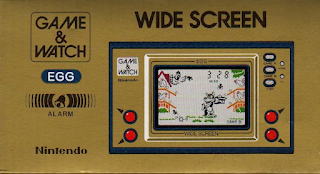
Mickey Mouse was the thirteenth game by Nintendo Research & Development 1 in Nintendo's line of Game & Watch consoles. It was redesigned without the Disney license as Egg, which was the fourteenth Game & Watch console. Both versions were released in 1981.

In the original Mickey Mouse-branded game, Mickey tends to chickens in a chicken coop and has to catch the eggs. The game is played on a simple liquid crystal display and depicts Mickey Mouse, a chicken sitting on top of one of the coops, and the eggs in a frame-by-frame style. The background panel is in color and depicts the coops from which the eggs come as well as other stationary chickens and grass. 

The Egg version is identical, except Mickey Mouse is now replaced by a wolf that is stealing eggs from chicken coops in a hen house. This version works much better thematically and is the version that Nintendo has remade and ported onto more powerful systems over the years.

Egg was converted to and remade in Game & Watch Gallery 3 for the Game Boy Color in 1999. It has the classic mode, which is identical to the original, as well as a modern mode. The modern mode takes a cue from the puzzle game Yoshi's Cookie since a blue Yoshi collects cookies as they come out of an oven. The modern version adds a bit of spice into the mix since bob-ombs will sometimes have to be avoided while the cookies are being caught.

Game & Watch Gallery 3 was available through emulation on the Virtual Console on Nintendo 3DS in 2014 as well as through the Game Boy emulator available to Nintendo Switch Online subscribers on Nintendo Switch in 2023.

On a side note, in the Soviet Union, both versions of the game were bootlegged as part of the Elektronika Microprocessor Games line. Mickey Mouse was copied directly under the Russian translation of Mickey Mouse, Микки Маус. Egg became Ну, погоди!, which is romanized as Nu, pogodi!, and is translated as Well, Just You Wait! in English. Well, Just You Wait! was a popular series of animated shorts in the Soviet Union, and later in Russia, that were produced by Soyuzmultfilm. The wolf from Nu, pogodi! replaced Nintendo's wolf and the hare from Nu, pogodi! replaced the chicken sitting on top of a chicken coop.

There are also a whole bunch of Soviet Elektronika consoles that used the Soviet bootleg of the Mickey Mouse microprocessor with different art, graphics, and themes. You can find out about them in a separate review located here. 

Like all Game & Watch games, there is fun to be had with Mickey Mouse and Egg in short bursts. If you want to try it, I recommend the version in Game & Watch: Gallery 3. This way, you not only get a conversion of the original game from 1981 but a modern mode as well. The modern mode adds more advanced color graphics as well as a modification to the game formula by adding bob-ombs, which leads to a slightly less monotonous experience.

Final Verdict:
3 out of 5

Sunday, March 5, 2023

Handheld Puzzle Game Review: Dr. Mario


Dr. Mario for the Game Boy is an adaptation of a falling block puzzle game that was released for the Nintendo Entertainment System on the same day. 

The game has Nintendo's mascot Mario as a doctor throwing the pills into the jar of a mix of three different shaded cartoon-styled viruses. 

The viruses are eradicated by pills that contained two sides with differing shades of grey, or green if it was played on the original Game Boy model. The color scheme is the main drawback of the Game Boy version of Dr. Mario. Unlike the NES version, which had blue, red, and yellow pills corresponding to the color of the viruses, the Game Boy has monochrome graphics. This made the pills different shades of grey, or green if it was played on the original Game Boy model.

Because the pills simply have different shades rather than different colors, it added a level of difficulty to the game. It will be a bit hard to play until you get the hang of which pill side is which.

The aesthetic retains the same comforting cartoon atmosphere. Even with the smaller screen resolution of the Game Boy compared to the NES, all of the game elements survived. One minor change to compensate for the smaller game space is that the viruses were moved from the left to the right and placed in a tight bubble within the game's user interface. That's not an issue, however, as the viruses still move comically, albeit a bit differently than the NES version.

Thankfully, the gameplay remains the same. The control remains satisfyingly simple, so players will be able to play it right out of the box. Pills are moved right and left with the four-way gamepad. Pressing the down button on the gamepad causes the pill to drop faster. Both the A and B buttons are used to rotate the pills. The A button will rotate the pills to the left whereas the B button rotates them to the right.

There are three speeds available, low, medium, and high, or low, med, and hi as displayed in-game. Levels can be chosen, with more viruses being added as the levels progress up to level 20, which has 84 viruses. The game continues past level 20, however, the virus count remains at 84.

The cutscenes in the Game Boy version are totally different than those in the NES version. Instead of hanging out on top of a tree, the viruses are at the bottom of a body of water. Bubbles rise up to the surface and different kinds of sea creatures pass by such as blowfish and crabs. It's cute and much less crazy than the odd things that pass by in the NES version.

All of Hirokazu Tanaka's soundtrack survives the NES to Game Boy conversion. The title screen, menu, and cutscenes still contain their respective tunes. Thankfully the two compositions that act as stage music remain as well. The slower tune retains the name chill and the faster tune is still fever. This is a relief, as I can't imagine playing a Dr. Mario game without them, especially the fever tune.

Dr. Mario for the Game Boy is as fantastic a puzzle game as the NES version. However, it is let down by its monochrome graphics as it is hard to distinguish between the two-shaded pills as opposed to the two-colored pills on the NES. This can be mitigated by playing on a system that has color filters such as the Super Game Boy peripheral for the Super Nintendo Entertainment System, the GameCube Game Boy Player, or the Game Boy Advance.

Thankfully, the controls remain easy to understand, and are very responsive, which is needed for a falling block puzzle game. All of the memorable music is here, including the fever and chill stage tunes. The cartoon-styled viruses are still wacky, although their moves are different when compared to the NES version. 

I recommend playing the NES Dr. Mario versus playing the Game boy version. The monochrome graphics make it difficult to differentiate between the two-shaded pills. If you play the game with Super Game Boy color filters or use the fan patch called Dr. Mario DX which converts it into a Game Boy Color game, it might be worth playing to see the cutscenes that are unique to this version of the game.

Final Verdict:
4 out of 5

Tuesday, February 28, 2023

Whack-a-Mole Video Game/System Review: Game & Watch Vermin


Vermin was the third game in the popular Game & Watch series, Nintendo Research & Development 1's first series of handheld consoles. Like the other Game & Watch games, it is an LCD frame-by-frame style of game.

Vermin is a whack-a-mole game. The vermin come through the dirt toward the character that is now known as Mr. Game & Watch. He has to keep the vermin from coming to the surface by hitting them with the hammers held in his left and right hands. As mentioned above, the game is a frame-by-frame style of game. The vermin will move bit-by-bit in the dirt piles on the screen, and the goal is to simply hit the left or right button at the right time to whack them back down into their holes. As the game moves on, more vermin will have to be hit, with the speed getting progressively faster.

Vermin is an antiquated style of game, but it has been remade in both antiquated versions and in more advanced forms several times. The first was in the European-exclusive Game Boy Gallery for the original Game Boy. This version had better graphics, although still in black and white. It now has background art and the player character was given a face. 

It is in Game & Watch Gallery 2 for the Game Boy, only in Japan, and for the Game Boy Color worldwide. Vermin is available in two versions. The first is the original Game & Watch game with Mr. Game & Watch. In the modern game, the graphics are improved and Yoshi is the character with the hammer. In this version, Yoshi protects Yoshi eggs from the vermin that try to steal them.

Nintendo released several accurate conversions of Game & Watch games for the DSi, including Vermin.

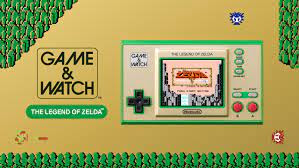
The most recent remake is one of the three games in Game & Watch: The Legend of Zelda. This version is the original Game & Watch version that contains the stick figure of Mr. Game & Watch with the head of Link. He hits vermin common in Hyrule with his hammers which are known as octoroks.

Like all Game & Watch games as well as all whack-a-mole games, Vermin is entertaining in short bursts. The original Game & Watch version has antiquated graphics and gameplay. The 2009 re-release adds the option to turn the bleep-bloop sound effects off, which is a much-needed addition. The version in Game & Watch: The Legend of Zelda is the easiest to obtain as of the time this review was posted. However, despite the addition of Link's head and octoroks, it still has the same antiquated graphics and gameplay. The best version, by far, is in Game & Watch Gallery 2. The modern mode adds the gameplay change of keeping six eggs from being stolen as well as varied vermin such as fly guys, para troopas, and boo buddies. 

Because of the enhanced graphics and different vermin types, as well as the ability to play the original version, Game & Watch Gallery 2 is the version I recommend trying if you want to play it. It is available for Game Boy, Game Boy Color, and the 3DS Virtual Console. It will also soon will be available for the Game Boy emulator on Nintendo Switch's online service. Whack-a-Mole has always been a fun timewaster in arcades, and Vermin is an entertaining twist on the classic game.

Final Verdict:
3½ out of 5

Monday, February 27, 2023

Action Video Game/System Review: Game & Watch Mario Bros.

Mario Bros. by Nintendo Research & Development 1 was the twenty-fourth Game & Watch console. It was actually the first game that included both Mario brothers, Mario and Luigi, as it was released before their eponymous arcade game.

It is a frame-by-frame game on a liquid crystal display. In the game, Mario and Luigi work in a factory packing bottles and loading them on a truck. In the unofficial sequel for the Commodore 64, as well as the officially released Game & Watch Gallery 3 for Game Boy Color, the brothers pack up cakes instead of bottles.

Mario is on the right and Luigi is on the left. Mario loads the base on a conveyor belt, it goes through a machine and comes out the other side. Mario and Luigi have to go up and down ladders in order to keep the packages from falling to the ground. When the fully packed items get all the way to the top, Luigi tosses them in a shipping truck. 

In the Game & Watch Gallery 3 remake, Wario also sometimes messes with the process, and Luigi has to pull a lever to the left in order to fix it. Also in the remake, the truck takes off and a new one comes back to start the process again.

Like all Game & Watch games, Mario Bros. is simple. However, despite its simplicity, the game works well on double screens of this version of the Game & Watch system. Game & Watch Gallery 3 is the best way to play it, whether it is on the Nintendo Game Boy Color, Nintendo 3DS, or Nintendo Switch. The addition of Wario throwing a spanner in the works adds more complexity, and the more advanced technology allows for color graphics as well as animation. This is much less remembered than the arcade game of the same name, which is a shame, as this is actually one of the most fun Game & Watch games.

Final Verdict:
3½ out of 5

Saturday, February 25, 2023

Arcade Shoot 'em Up Review: Donkey Kong 3


Donkey Kong 3 ditches Mario and platforming and pits Donkey Kong, and bugs, against Stanley the Bugman.

As with most games of the era, Donkey Kong 3 has a simple plot. Donkey Kong takes over a greenhouse. Stanley uses his bug spray to chase Donkey Kong away and to keep the bugs from ruining the flowers.

It plays like a static shooter. Stanley can run across the floor and jump up and down the platforms at will. Donkey Kong inches down the vines he is on, and Stanley needs to keep spraying him to chase him out of the greenhouse. Making this task harder is multiple bugs that get in the way of his spraying as well as try to steal his flowers. So, Stanley has to spray the bugs that try to take his plants and spray past the bugs crawling on the platforms to shoo Donkey Kong away. Stanley will lose a life if the bugs take all of his flowers. More lives can be earned by reaching 50,000 points.

Once Donkey Kong is chased away in one level and he returns again in the next. There are three levels that repeat with each progressive level getting harder than the last. 

Donkey Kong 3 is acceptable as a concept, but fans didn't take to the game, and it's easy to see why. It is weird that Nintendo followed up two popular arcade platformers with an arcade shooter. Stanley the Bugman was relegated to history, other than in a Game & Watch game, a Hudson Soft shooter, and minor appearances in the Super Smash Bros. games. Like other games in the Donkey Kong series, Donkey Kong 3 has been ported to many platforms. If you want to try it, the arcade version remains the best and, since it was finally released by Hamster for the Nintendo Switch in 2019, is the version to play.

Final Verdict:
3 out of 5
Donkey Kong Junior reviewMario Kart 64 Review

Sunday, February 19, 2023

Platform Game Review: Super Mario Land 2: 6 Golden Coins


Super Mario Land 2: Six Golden Coins is a bigger game that is more aligned with the mainline Super Mario games than its predecessor.

In this game, Mario's nemesis Wario appears for the first time. Wario is an evil doppelganger of Mario who stole the latter's castle. Mario has to complete many levels in order to collect the six golden coins that are needed to confront Wario and take back his castle.

Mario's sprite is aligned with the Nintendo Entertainment System sprites and the flowers once again are fire flowers that grant the ability to throw fireballs rather than bouncy superballs. This removes the ability to collect coins in small places, but the levels are designed in a way that wouldn't need them anyway. As in Super Mario Land, the rest of the power-ups from the main series are here including the super mushroom that makes Mario large and starmen that grant temporary invincibility. Due to the monochrome graphics of the Game Boy, the 1-Up that grants an extra life is a heart rather than a green mushroom.

The game makes up for this by making the game huge compared to the first Super Mario Land. Mario traverses the island that makes up his titular land, traveling through six zones with a total of thirty-two levels. This is much larger than the twelve levels within four worlds that were in the original game.

Like Bowser, King of the Koopa, changes radically in size depending on the game, Wario does so here as well. In the boss fight, which is the first time Mario confronts the twisted thief, Wario is gigantic. This makes it a more satisfying ending, however, as beating a large opponent felt like a win for our mustache-sporting land owner. Wario would take his defeat toward higher heights as the next game was Wario Land, and Mario land became a relic of history.

Like Super Mario Land before it, fans have released a fan patch for Super Mario 2: Six Golden Coins that converts the game to full color for use on the Game Boy Color. As with the other fan patch, this colorization is extremely well done.

Super Mario Land 2: Six Golden Coins is a great game that improves on every aspect of its predecessor. If you are able to play the game using the Super Mario Land 2 DX fan patch, such as playing the cartridge on the RetroN 5 with the patch loaded from an SD card, I highly recommend playing the game this way. However, even if you are only able to play it with monochrome graphics on the Game Boy cartridge or on the Virtual Console for Nintendo 3DS, I still highly recommend it. This game is a game that deserves to be played by all Super Mario fans.

Final Verdict:
5 out of 5


Saturday, February 4, 2023

Light Gun Shooting Game Review: Duck Hunt


Duck Hunt is a game for the Nintendo Entertainment System. It is one of the well-known, and best-remembered, NES games in the United States because it was bundled with the system in a double game cartridge with Super Mario Bros.

Duck Hunt is a rifle shooting game based on a Beam Gun toy of the same name. There are three modes. Game A has one duck at a time on screen and Game B has two ducks. Game C is Duck Hunt, which is based on a Beam Gun toy of the same name. Game C is Clay Shooting which is based on the arcade game, Laser Clay Shooting System.

The game is simple but addicting. The duck hunting modes are the most fun, as you try to shoot birds that fly in zig-zag patterns. Your hunting dog will go off barking to bring your catch back to you. If you miss all ducks on the screen, then the dog will laugh at you. To gamers of a certain age, both the barking and laughing sound effects will be fondly and not-so-fondly, remembered respectively.

Duck Hunt is one of those "simple is better" games, and it does so in all of the best ways. It's simple but addictive, and there is the optional difficulty setting to have multiple ducks on the screen at a time. You can also do some clay shooting, but without the duck animations, it's far less entertaining. The only drawback in this day and age is that modern LCD televisions don't do horizontal refreshes, so traditional light guns don't work. Without a CRT television, you can only play the game on the Wii U Virtual Console or with a modern solution such as a Wiimote mixed with an Arduino to record the shot locations.

Addendum October 8, 2025: There is also an arcade version for the PlayChoice-10. This version is identical to the NES version, except there is a time limit in place where the game will quit when time runs out.

Final Verdict:

4 out of 5

Monday, January 30, 2023

Puzzle Game Review: Dr. Mario


Dr. Mario is a unique take on the falling block puzzle game that was popularized by Tetris. Because of the huge worldwide success of Tetris, every game in the genre is ultimately compared to it. Dr. Mario managed to stand out and became a popular puzzle game in its own right.

The game, at one point during development, was known under the title of Virus. By the time it was released, Nintendo's mascot Mario was a doctor throwing the pills into the jar of a mix of three different colored cartoon-styled viruses. 

The viruses are eradicated by two-colored pills. Four of the same color, either through pills or a combination of pills and one or more viruses, causes the color line to disappear Tetris-style. Any remaining pills then drop down to the viruses below. 

The control is satisfyingly simple, making this a true pick-up-and-play experience. The Nintendo Entertainment System controller is utilized perfectly for this. Pills can be moved right and left with the gamepad. Like Tetris, pressing the down button on the four-way gamepad causes the pill to drop faster. Both the A and B buttons are used to rotate the pills. The A button will rotate the pills to the left whereas the B button rotates them to the right.

There are three speeds available, low, medium, and high, or low, med, and hi as displayed in-game. Levels can be chosen, with more viruses being added as the levels progress up to level 20, which has 84 viruses. After a cutscene, the game continues past level 20 however the virus count stays at 84.

Speaking of cutscenes, with the exception of lo-mode with a cutscene that appears only after level 20, they pop up after 5 levels. They consist of objects flying over a tree that contains the three colors of viruses on top. These objects are all somehow satisfyingly weird, ranging from a chicken to a flapping book. The ending cutscene, with the final fate of the viruses, is only shown after level 20 on hi-mode.

The music was created by the chiptune pioneer, Hirokazu Tanaka. The title screen, menu, and cutscenes each contain a different tune. They are quite enjoyable in their own right, however, the tunes that are heard the most are the stage music. There are two to choose from through the menu. Chill is a slower tune, and fever is the quicker of the two. Satisfyingly, these are the most catchy tunes in the game, especially fever. That tune gets stuck in my head occasionally even 30-some-years after I first heard it.

Dr. Mario is a fantastic puzzle game. The two-colored pill formula as well as the controls are easy to understand, making it a true pick-up-and-play type of game. The music is fantastic and extremely memorable. The graphics are fun, especially the wacky cartoon-styled viruses. Dr. Mario is a highly recommended game, especially to falling-block puzzle fans. It is a true classic.

Addendum October 8, 2025: There is also an arcade version for the PlayChoice-10. This version is identical to the NES version, except there is a time limit in place where the game will quit when time runs out.

Final Verdict:

5 out of 5

Wednesday, October 19, 2022

Platform Game Review: Super Mario Land


Super Mario Land was a platform game for the original monochrome Nintendo Game Boy portable video game console. It was the first game in the Super Mario Land subseries as well as the first game in the Super Mario series to be developed by Gunpei Yokoi’s Research & Development 1 rather than Shigeru Miyamoto’s Research & Development 4. The result was a Super Mario game different than any that had come before, as well as everything that came after.

In the game, Mario travels to Sarasaland where he rescues Princess Daisy from an alien known as Taranga. Even though the formula is pretty much the same with Peach switched with Daisy and Bowser switched for Taranga, some of the play mechanics are very different. This makes the game feel fresh, even thirty-three years after it was first released.

Most of the power-ups are familiar to Super Mario fans. There are mushrooms that cause Mario to grow if he is small. 1-Up mushrooms, which grant an extra life, have been replaced with 1-Up hearts due to the fact that the monochrome graphics would make it hard to distinguish between different mushrooms. The power-up change that changes the way the game plays is the power of the flower. In this game, flowers give the power of superballs rather than fire. They can be used in the usual way, to kill enemies. However, they can also be used to collect coins. Mario can shoot them into areas that he can't reach, allowing him to collect coins in passages that only small Mario would normally be able to reach.

Another change in the gameplay comes in the water level. Instead of swimming, there is a Mario-sized submarine named the Marine Pop that's used instead. The submarine can shoot missiles as well as collect coins, which gives the level the feel of a horizontal shooter rather than a platformer. The horizontal shooter aspect is only used again in the last stage, with an airplane known as the Sky Pop. I really wish that they'd use the vehicles again, as I really enjoyed the two shooter levels. I do not mind the traditional underwater levels, but I actually found it more fun to power a submarine through them rather than swim.

The game was only officially released in monochrome for the Game Boy, however, there is a fan patch named Super Mario Land DX that turns the game into a full-color Game Boy Color game. This patch adds color to the game and changes the sprite graphics to more closely match other games in the series. It is very well done.

Super Mario Land is an excellent game that deserves to be played. If you are able to play the game using the Super Mario Land DX fan patch, such as playing the cartridge on the RetroN 5 with the patch loaded from an SD card, I highly recommend playing the game this way. However, if you are only able to play it with monochrome graphics on the Game Boy cartridge or on the Virtual Console for Nintendo 3DS, the game is still worth playing. The gameplay mechanics that are unique among Super Mario games, as well as fun music, tight platform mechanics, and great level design, make this one a must-play.

Final Verdict:

4½ out of 5

Friday, October 14, 2022

System Review: Game & Watch The Legend of Zelda

2020's Super Mario Bros. Game & Watch was a neat throwback to the height of the Nintendo craze in the 1980s. However, it was topped last year with one based on The Legend of Zelda (not connected to the 1989 Zelda Game & Watch).
Like the Mario-themed Game & Watch, the Zelda-themed version is housed in a shell that closely resembles the standard screen format Game & Watch systems. This time, though, it includes three games, or four if you count the remake of Vermin with Link in place of Mr. Game & Watch. 

Like the Mario model, the Zelda Game & Watch is a very small system with an LCD screen that displays the included games in full color, instead of black and white, frame-by-frame. graphics of the original Game & Watch systems. It consists of the Nintendo Entertainment System versions of The Legend of Zelda and Zelda II: The Adventure of Link faithfully reproduced through a custom emulator.

What elevates this system to the top of the Game & Watch pile, however, is the inclusion of the original black and white Game Boy version of The Legend of Zelda: Link's Awaking. It's a classic Game Boy game that plays on a system that replicates the Game Boy's forefather. Like onions and garlic, they just go great together.

As stated above, the system also includes a remake of the third Game & Watch game, Vermin. This version mimics the original, complete with the frame-by-frame graphics of early LCD games. This time though, it's Link that uses his hammer to smash the octoroks, giving the poor moles a well-deserved break.

As with the Super Mario Bros. Game & Watch, The Legend of Zelda Game & Watch includes a neat little clock. It tells the time with The Legend of Zelda graphics, straight from the originator of the series, the first game on the Family Computer Disk System, which was released later on cartridge for the Nintendo Entertainment System and the Family Computer.

As with all systems on this site, I will be individually reviewing all of the games included in this system. But until then, I'll just say that I wholeheartedly recommend this system. The Mario-based Game & Watch was a cute little throwback, but with the games included in this system, especially Link's Awakening, it is truly more than a conversation piece.

Final verdict:
5 out of 5

Sunday, October 2, 2022

System Review: Game & Watch Super Mario Bros.

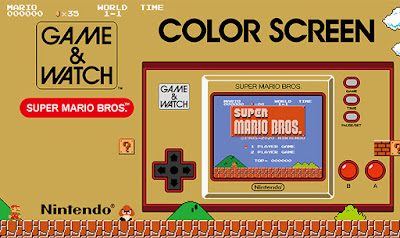
The Super Mario Bros. Game & Watch (not to be confused with the 1986 Game & Watch game of the same name) is a fun throwback by Nintendo that celebrates two of its best-selling products, the Game & Watch LCD handhelds and the Super Mario series.

Thankfully, LCD screen technology has come a long way since 1991 when the last Game & Watch system, Mario the Juggler, was released. Instead of the slow frame-by-frame gameplay in the classic Game & Watch systems, the new Game & Watch is full color and plays the Nintendo Entertainment System version of Super Mario Bros. faithfully through a custom emulator.

Adding to the fun, the Japanese Family Computer Disk System version of Super Mario Bros. 2, also known as Super Mario Bros.: The Lost Levels and Super Mario Bros. For Super Players, has been included. This game isn't as well known and is hard as nails, but it's great they included it in its original form.

It also includes a Game & Watch remake that blends the first Game & Watch game, Ball, with the last Game & Watch game, Mario the Juggler. This version of Ball mimics the former, with frame-by-frame graphics, but Mario is juggling the ball.

The game also comes with a fun clock that has Super Mario. Bros.-style graphics with various actions taking place around the displayed time. The neat thing about this is that the clock is tied to some easter eggs. If you view the clock at specific times in the day, different actions will appear on the clock. The most fun easter egg, however, is the one that takes place during the ninth hour, both in the AM and in the PM. When you play Ball at this time, Mario will be replaced by Luigi.

I'll be taking a look in-depth at the included games at some point in the future, but suffice it to say, this is worth the purchase, especially if you are a fan of the included games or just a fan of Mario in general. The games included, especially the first Super Mario Bros., are classics that are infinitely replayable. I won't fault you, though, if you just use it just as a clock. It is cute.

Final verdict:
5 out of 5

Thursday, October 3, 2019

Arcade Platform Game Review: Donkey Kong Junior


This review was originally posted on the McMurray Internet Channel website on December 19, 2018.

Donkey Kong Junior is the first game that pits Mario as an enemy to the player character. The latter is the titular Donkey Kong Jr., who must rescue his father from Mario, who has caged the gorilla due to his repeated attempts to steal Mario’s girlfriend in the previous game.

As this game stars a primate, there is a lot of climbing involved. Donkey Kong Jr. must climb up vines, ropes, and chains while avoiding the obstacles Mario sends after him such as crocodiles and electrical sparks. He will climb slowly when transcending a single vine, but if he climbs two at once, he will move faster.

The level design is quite well made in this game. It’s still a single screen, like its predecessor, but there are now much more varied obstacles than before, including trampolines and chains that raise and drop in height. Because of this level of variety, I recommend this game even more than the original.

Like the first game, Donkey Kong Junior was ported to many different systems, including the Atari 2600, Intellivision, Colecovision, Atari 8-bit computers, Nintendo Entertainment System, BBC Micro, Commodore-64, VIC-20, Coleco Adam, Famicom Disk System, and Atari 7800.

Also like the first game, outside of the original arcade version, the NES version was the most accurate of the versions. This version was emulated on the Nintendo 64 (in Animal Forest), e-Reader, Game Boy Advance, GameCube (in Animal Crossing), Wii, Nintendo 3DS, Wii U, Famicom Mini, and the NES Classic Edition.

The game is a classic that deserves to be played by everyone. The best version remains the original arcade release, which was finally officially emulated in its entirety by Hamster as part of its Arcade Archives line on the Nintendo Switch on December 21, 2018.

Final Verdict:
4 out of 5

Wednesday, October 2, 2019

Arcade Platform Game Review: Donkey Kong


This review was originally posted on the McMurray Internet Channel website on December 8, 2018. It was updated to include newer systems on which the game was included as well as to add links on June 9, 2025.

Donkey Kong was the first game designed by Shigeru Miyamoto. Nintendo of America had many unsold Radar Scope arcade games and asked for a new game that could be shipped as a conversion kit for those cabinets. The management at Nintendo asked designers for game ideas, and the idea by Miyamoto (who had previously designed the case for the Color TV-Game Block Breaker console) was chosen.

The original concept was to be based on Popeye, but Nintendo couldn’t acquire the rights at the time. So, the broad character types were given to new characters. Popeye the Sailor became a carpenter, Bluto became the carpenter’s pet gorilla, and Olive Oyl became the carpenter’s girlfriend.

The carpenter was originally named Ossan, a nickname for a middle-aged man. He was then named Mr. Video, as Shigeru Miyamoto intended him to be an everyman character to use in any game that he created. When Donkey Kong was released, he was labeled Jumpman on the cabinet of the Japanese release of Donkey Kong, and Mario for the North American release. This name, as well as Mario’s Italian-American heritage, came from a man named Mario Segale. He was the landlord of a warehouse which was rented at the time by Nintendo of America.

Mario’s pet gorilla was named Donkey Kong, chosen because the designers wanted to signify that he was a dimwitted creature. In 1984, lawyers for Universal sued Nintendo over the name, which it claimed infringed on its King Kong trademark, but Nintendo won the case. The Nintendo lawyer, and future chairman, Howard Lincoln, noted that Universal themselves proved that the plot of King Kong was in the public domain in a court case against RKO Pictures in 1976.

Mario’s girlfriend was named Lady on the cabinet of the Japanese release of Donkey Kong, and Pauline for the North American release. This name came is said to come from a woman named Polly James, who was the wife of Don James, the warehouse manager at Nintendo of America.

Mario’s trademark hat, overalls, and mustache were designed to overcome the limitations of the hardware of the time. This design made it easy to distinguish his arm and leg movement, as well as his face. It also gave the game a unique aesthetic compared to the other games of the time period.

The object of the game is to have Mario climb platforms in order to rescue Pauline from Donkey Kong. Mario must dodge the barrels thrown by Donkey Kong, as well as other obstacles in the way. Once Mario completes a stage, Donkey Kong will carry Pauline off to the next stage. Each stage is presented in meters, with the game asking Mario how high he’ll be able to get. The four stages are named by height: 25m, 50m, 75m, and 100m. Once 100m is completed, Mario will reunite with Pauline, only for Donkey Kong to kidnap her again and the game will repeat the four levels again. Like other arcade games of the time, the game gets harder as it goes on and the object is to get the highest score.

The game was ported to many systems, including the Atari 2600, Intellivision, Colecovision, Atari 8-bit computers, Nintendo Entertainment System, TI-99/4a, PC Booter, Commodore 64, VIC-20, MSX, ZX Spectrum, Amstrad CPC, Coleco Adam, Famicom Disk System, and Atari 7800.

Outside of the original arcade version, the NES version was the most accurate of the versions, except for the missing 50m, or factory stage. This version was emulated on the Nintendo 64 (in Animal Forest), Game Boy Advance, Game Boy Advance e-Reader, GameCube (in Animal Crossing), iQue Player (in Animal Forest), Wii, Nintendo 3DS, Wii U, Famicom Mini, and the NES Classic Edition.

A more arcade-accurate version for the NES called “Donkey Kong: Original Edition” was released in 2010 for Wii in Europe pre-installed on red Mario 25th anniversary Wii consoles. It was later released on 3DS in 2012. The NES version was released via emulation on the Nintendo Switch for Nintendo Switch Online subscribers in 2018. It was included via the GameCube version of Animal Crossing via emulation on Nintendo Switch 2 for Nintendo Switch Online Expansion Pass subscribers in 2025.

The game remains a classic and is worth playing even today. The best version remains the original arcade release, which was finally emulated in its entirety by Hamster as part of its Arcade Archives line on the Nintendo Switch on August 16, 2018.

Final Verdict:
4 out of 5
Donkey Kong Junior review

Tuesday, October 1, 2019

Arcade Platform Game Review: Mario Bros.


This review was originally posted on the McMurray Internet Channel website on December 15, 2018.

Mario Bros. was the first game to feature Mario's brother Luigi and the first to feature the titular duo as the first and second player.

The game sees Mario shed his carpenter profession and join his brother Luigi in life as a plumber, heading into the sewers of New York City to eliminate all creatures that come through the pipes. The game has two-player cooperative play as both brothers try to take out the creatures together. Unlike the later Super Mario Bros. games, the creatures have to be knocked from below, which will flip them over.  Trying to step on them while they aren't flipped over will result in the loss of one life. The flipped-over enemies have to be knocked off the playfield into the water below by kicking them before they flip back over.

The creatures start off easy, with the shellcreeper turtles, which require only one hit to flip them. The game gets progressively harder, as enemies that require multiple hits, enemies that fly, obstacles that cause ice to form on the ground making things slippery, and many more enemies and obstacles, try to stop the brothers from performing their task.

To ease things a little bit, there is also a POW block in the middle of the stage, which will automatically cause one hit to every enemy that is touching the ground. However, this POW block can only be used three times during a game before it is used up forever.

Like Donkey Kong before it, the game has been released on many different platforms, including Atari 2600, Atari 5200, Apple II, Commodore-64, Amstrad CPC, ZX Spectrum, Nintendo Entertainment System, Atari 7800, and Atari 8-bit computers.

The NES version was emulated on the Nintendo 64 (in Animal Forest), e-Reader for Game Boy Advance, GameCube (in Animal Crossing), Wii, Nintendo 3DS, Wii U, Famicom Mini, NES Classic Edition, and the Nintendo Switch legacy games online service. The gameplay was also included as a mini-game in Super Mario Bros. 3, and a Super Mario All-Stars-style remake was released with the Super Mario Advance games for the Game Boy Advance.

The arcade original is the best version of Mario Bros., and it was finally emulated in its entirety by Hamster as part of its Arcade Archives line on the Nintendo Switch on September 27, 2019. Hamster's Switch version is the way to go as it also includes online multiplayer co-op gameplay.