Showing posts with label emulation. Show all posts

Tuesday, April 4, 2023

System Review: Astro City Mini


Following consoles shaped like miniature arcade game cabinets from companies such as SNK, Sega decided to dip its own foot in the well with the release of the Astro City Mini.

The system is modeled after Sega's popular sit-down candy cabinet known as the Astro City. It's a self-contained unit with a screen, speakers, and a joystick with arcade-style buttons. The screen picture is sharp and easy to read the text on the screen despite its small size. The speakers have a little too much treble with too little bass for my tastes, but they sound fine. The most important part, the joystick, is a dream. It has the tight feel of an arcade joystick. Plus, the buttons have a satisfying click-clack and aren't mushy.

The thirty-six games included are Alex Kidd: The Lost StarsAlien Syndrome, Alien Storm, Altered BeastArabian FightBonanza Bros.ColumnsColumns II: The Voyage Through Time, Cotton: Fantastic Night DreamsCrack DownCyber Police ESWATDark EdgeFantasy ZoneFlickyGain GroundGolden AxeGolden Axe: The Revenge of Death AdderNinja PrincessPuyo PuyoPuyo Puyo 2Puzzle & Action: Ichidant-RPuzzle & Action: Tant-RQuartet 2Rad MobileScramble Spirits, Seishun ScandalShadow DancerShinobiSonic BoomSpace HarrierStack ColumnsThunder Force ACVirtua FighterWonder BoyWonder Boy in Monster Land, and Wonder Boy III: Monster Lair

It also includes a bonus game in Dottori-kun. This game is based on Sega's 1979 arcade game, Head On. It was included with Astro City cabinets as a test game to ensure everything was hooked up and functioning correctly.

The included games spread across a wide variety of genres, from beat 'em ups such as Altered Beast and the Golden Axe games, to fighting games such as Dark Edge and the classic Virtua Fighter, the maze game Dottori-kun, platformers such as the Alex Kidd games and Flicky, puzzle games like the Columns and Puyo Puyo series, racing games such as Rad Mobile, run-and-gun games such as Alien Syndrome and Crack Down, and shoot 'em up games such as Cotton: Fantastic Night Dreams.

The console was released by Sega Toys in Japan and by Limited Run Games worldwide. As of the time this article was published, on April 4, 2023, the Limited Run release is rather expensive but the original Japanese release is reasonably priced and easy to obtain.

Since Sega began releasing its own game-packed retro consoles rather than relying on outside companies such as AtGames, it has arguably become the leader of the miniature console market. Astro City Mini continues that trend with thirty-seven games spanning multiple genres of arcade games that were originally released between the mid-1980s to the mid-1990s. The emulation is fantastic, the console is cute, the sound is adequate, and the joystick and buttons are as tight as you'd hope for in an arcade cabinet release. Because it can also be hooked up to television sets through HDMI and to external joysticks and gamepads through USB, it is a fantastic way to experience three dozen arcade classics.

Final Verdict:
4 out of 5

Wednesday, February 22, 2023

Action-Adventure Game Compilation Review: The Legend of Zelda: Collector's Edition


It's not common, but Nintendo occasionally releases compilations of their video games on physical media. That is the case with The Legend of Zelda: Collector's Edition for GameCube, which has become highly sought after in recent years.

It contains four classic action-adventure games in The Legend of Zelda series across two different platforms. The Legend of Zelda and Zelda II: The Adventure of Link are Nintendo Entertainment System games while The Legend of Zelda: Ocarina of Time and The Legend of Zelda: Majora's Mask, are Nintendo 64 games. 

These games were not ports as they were presented through emulation. The Nintendo Entertainment System emulator was previously used in Animal Crossing while the Nintendo 64 emulator was previously used in The Legend of Zelda: Ocarina of Time and The Legend of Zelda: Ocarina of Time - Master Quest compilation.

The Nintendo Entertainment System emulation is fantastic, as the games play nearly identically to the original releases. The differences include changes to reduce the amount of flickering to prevent seizures and numerous translation corrections in The Legend of Zelda. These changes were originally made for the Classic NES Series for the Game Boy Advance.

The Nintendo 64 emulation, however, isn't quite up to par. There are slowdowns in both games, which can be forgiven as the Nintendo 64 was only one console generation behind the GameCube. It is honestly quite impressive the emulator runs the games as well as it does. Less forgivable, however, is the fact that Majora's Mask is known to be prone to crashes.

The compilation also contains two videos. One is an advertisement for The Legend of Zelda: Wind Waker while the other is named The Legend of Zelda: A Respective. The latter video includes logos and gameplay from all of the games in The Legend of Zelda series that were released up to the point of its release in 2003. As it includes only the games that Nintendo deems part of the series canon, there aren't any outliers included here such as the CD-i games.

The Legend of Zelda: Collector's Edition was a great compilation in its time as it included four The Legend of Zelda games in one package. The Legend of Zelda and Zelda II: The Adventures of Link are emulated remarkably well, and the localization fixes and flicker removal in the first game are a welcome inclusion. However, the Nintendo 64 games, The Legend of Zelda: Ocarina of Time and The Legend of Zelda: Majora's Mask, are not as well emulated. The crashes in the latter make this compilation more of a collector's item than a way to play the games. All four games have been emulated in re-releases much better in the years following this compilation. The video advertisement for Wind Waker and The Legend of Zelda: A Retrospective are really barebones and aren't enough to make this compilation worth recommending.

Final Verdict:
3 out of 5

Monday, February 20, 2023

Game Boy, Game Boy Color, and Game Boy Advance Games Now on Nintendo Switch Online

I'm late to the party, but Nintendo has finally released the Game Boy, Game Boy Color, and Game Boy Advance emulators that data miners had discovered were coming long ago.

There are two emulators, one for Game Boy and one for Game Boy Advance. Nintendo has always counted the Game Boy and Game Boy Color as part of one product line when they calculate sales, and they have done so for the Switch emulators as well.

The Game Boy emulator includes nine games so far. The games include the Game Boy Color games Alone in the Dark: The New Nightmare, Game & Watch Gallery 3, and Wario Land 3, as well as the Game Boy, games Gargoyle's Quest, Kirby's Dream Land, Metroid 2, and Tetris. Alone in the Dark: The New Nightmare isn't available in Japan and Hong Kong, however, the batch of games in Japan and Hong Kong includes the Japanese Game Boy game Yakuman

The Game Boy Advance emulator includes six games so far. These games include Kuru Kuru Kurin, The Legend of Zelda: The Minish Cap, Mario & Luigi: Superstar Saga, Mario Kart: Super Circuit, Super Mario Advance 4: Super Mario Bros. 3, and WarioWare Inc.: Micro Minigame$!

The emulator that includes Game Boy and Game Boy Color games is available for all Nintendo Switch Online subscribers while the Game Boy Advance emulator is only available for subscribers of the Nintendo Switch Online Expansion Pack.

Saturday, January 28, 2023

Platform Game Compilation Review: Super Mario 3D All-Stars


Super Mario 3D All-Stars, like its two-dimensional counterpart, is a compilation of Super Mario games. However, due to the advancements in technology, this compilation contains the original games which have been emulated, although sometimes enhanced, for the Nintendo Switch.

This compilation contains three games across three platforms. The games included are Super Mario 64, originally released on the Nintendo 64, Super Mario Sunshine, originally released on the GameCube, and Super Mario Galaxy, originally released on the Wii.

While the games have been updated to high-definition. Super Mario 64 is still in a 4:3 aspect ratio. Super Mario Sunshine and Super Mario Galaxy are presented in a 16:9 ratio. All of the games run in the Switch's native resolution of 720p in handheld mode and in 1080p in docked mode.

Super Mario 64 includes some enhanced textures to make up for the increase in resolution. Even more welcome is the inclusion of support for the wireless Nintendo 64 controller that Nintendo released for Nintendo Switch Online.

Super Mario Sunshine is the most impressive of the three games, as a lot has been done to make the game look and play great on the Switch. It is presented in true widescreen, which is very welcome. But, the thing that makes this worth playing over the original game is that it contains multiple control modes. It can be played with the original GameCube controls, or with updated controls that make it play more like a modern 3D Super Mario game. GameCube controller support is also available to those who have a GameCube Controller Adapter.

Like Super Mario All-Stars before it, Super Mario 3D All-Stars contains an excellent selection of Super Mario titles. Super Mario 64, Super Mario Sunshine, and Super Mario Galaxy are all classic 3D platformers. It's especially nice to see the addition of Super Mario Sunshine, as the game doesn't get the attention it deserves. With the option of a modern control scheme, Super Mario Sunshine is more accessible than it ever has been before. It is a little weird that Super Mario Galaxy 2 isn't included, but that exclusion doesn't put a dent in the value of this game. It's well worth picking up for fans of the 3D Super Mario games or just for fans of 3D platformers in general.

Final Verdict:
5 out of 5

Friday, January 20, 2023

System Review: Evercade


The original portable Evercade was released on May 20, 2020. It was just discontinued last year in favor of the new, as of 2022, portable Evercade EXP. This system can run all of the games that the EXP can, with the exception of the games that are built-in to the EXP. The original Evercade can also run some games that can't be run on the home Evercade VS system due to contract technicalities. It's not as big or as sophisticated as its sister, but it still packs a punch for retro game enthusiasts.

The Evercade systems are video game consoles that run cartridges filled with classic games on retro systems, as well as modern games on retro systems through emulation. In addition, a few of the games are classic-style games ported directly to the Evercade platform. Unlike its emulation-based peers, the games for the console are compilations stored on cartridges.

There are three tiers of cartridges. The first is the red collection titles that contain games meant to run on classic consoles or directly on the Evercade. The second is the purple arcade titles that contain arcade games in their native arcade forms. The third is the blue computer titles that contain games for retro computers. At the time of this writing, there are twenty-eight red collection cartridges, eight purple arcade collection cartridges, and one blue computer collection cartridge.

There are also eighteen Capcom games and five secret unlockable games built into the Evercade EXP as well as fourteen secret unlockable games (including the five from the EXP) built into the Evercade VS. These games, for obvious reasons, aren't compatible with the original Evercade. However, all of the cartridges from all three cartridge categories can be used with the Evercade. That includes Namco Museum Collection 1 and 2, both of which are only accessible, out of the box, on portable systems due to contract technicalities.

There are two drawbacks of the original Evercade when compared to the EXP. The first is that vertically oriented arcade titles can't be played in their native TATE configuration. If you prefer playing your TATE titles vertically rather than centered in the middle of a horizontal screen, the EXP is your best bet as the game can be rotated to play these games in a vertical orientation. The second drawback is the lack of WiFi. This means that, in order to update your system to the latest firmware, you need to download it on a computer and upload it on a USB drive which is then inserted into the Evercade and installed. The VS and EXP do have WiFi support, so these systems can be updated directly on the console.

The Evercade systems are well worth playing as they run classic game compilations on cartridge for reasonable prices. Blaze Entertainment, the creator of the Evercade systems, curates the games so each cartridge has quite a few gems. A few of my favorites, including the Gaelco Arcade collections, contain games from developers of which I hadn't heard about prior to their inclusion on the Evercade.

As the original portable Evercade has been discontinued, the price-conscious might prefer this console as it currently, as of the time of writing, can be picked up for a low price. If you are a Capcom fan or a fan of vertically aligned TATE mode games, the Evercade EXP would be the better choice. For couch potatoes, the home Evercade VS system might be the better choice. The handhelds can be hooked up to television sets through HDMI, but the VS is designed specifically for that purpose with two game cartridge inputs, four USB ports, and two included USB controllers. No matter which console you pick, however, there is a lot of fun to be had.

Final Verdict:
4 out of 5


Sunday, January 8, 2023

System Review: PasocomMini MZ-80C

PasocomMini was a series by HAL Laboratory to make mini consoles designed after computers which were popular in Japan. The first console was modeled on the Sharp MZ-80C.

It used a Raspberry Pi 1 A+ board inside a plastic shell that closely resembled the computer on which it was designed. It included a Micro SD card which contained the custom HAL Monitor operating system, a custom version of SmileBASIC, and five games.

SmileBASIC uses the hardware of the PasocomMini MZ-80C, which allows DS, 3DS, and Switch SmileBASIC programs to be adapted, entered by hand or via a text file, compiled, and run with full color and sound on the system. The HAL Monitor system, accessible by pressing F11 on a USB keyboard, displayed green graphics on a black background of the original MZ-80C system. The included games can be accessed by entering LD, then Enter. This brings up a simple graphical user interface that can be navigated using a USB mouse or by using the arrow keys and the Enter button on a USB keyboard.

The system is strictly nostalgic as the amount of included games is quite low and the green screen is only appealing to gamers of a certain age. That said, the included games are actually quite fun. 

Heiankyo Alien, created by the Theoretical Science Group of the University of Tokyo, was a game that was popular enough to be ported to multiple systems and released worldwide as Digger. It is a maze game that was originally released in 1979, a year before Pac-Man. The object of the game is to dig holes in the ground, trap aliens, and then use the shovel to pile dirt on top.

Cosmic Cavern, known in Japan as The Biggest Underground Operation in the Universe, was developed by Takaya Aria and released in 1980. It was the first sandbox game wherein bases of any shape are built by digging. It then becomes a defense game as the base needs to be defended.

HAL Laboratory also developed a game included in the console, Jupiter Lander, which was released in 1981. As the name implies, it is a Lunar Lander game where the object is to safely land, using thrusters, on the surface of Jupiter.

The last two games are Zeplis and its sequel Zeldis, which were developed and released by Yasuyuki Suzuki in 1985 and 1986, respectively. They were horizontally scrolling shoot 'em-up games set in space.

PasocomMini MZ-80C is an interesting curio, but that's about all. It didn't have as long a retail life as the PasocomMini PC-8001, so it is fairly uncommon. Because of that, it tends to fetch a hefty price. Five games, a custom emulator, and SmileBASIC don't really elevate this beyond more than an original series Raspberry Pi in a cool-looking shell.

January 9, 2022 Addendum: A mandatory USB keyboard and optional USB mouse, as well as the USB power plug, are not included with the system.

Final Verdict:
2½ out of 5

Friday, October 14, 2022

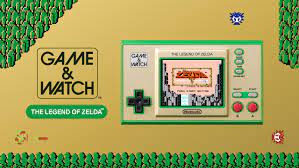
System Review: Game & Watch The Legend of Zelda

2020's Super Mario Bros. Game & Watch was a neat throwback to the height of the Nintendo craze in the 1980s. However, it was topped last year with one based on The Legend of Zelda (not connected to the 1989 Zelda Game & Watch).
Like the Mario-themed Game & Watch, the Zelda-themed version is housed in a shell that closely resembles the standard screen format Game & Watch systems. This time, though, it includes three games, or four if you count the remake of Vermin with Link in place of Mr. Game & Watch. 

Like the Mario model, the Zelda Game & Watch is a very small system with an LCD screen that displays the included games in full color, instead of black and white, frame-by-frame. graphics of the original Game & Watch systems. It consists of the Nintendo Entertainment System versions of The Legend of Zelda and Zelda II: The Adventure of Link faithfully reproduced through a custom emulator.

What elevates this system to the top of the Game & Watch pile, however, is the inclusion of the original black and white Game Boy version of The Legend of Zelda: Link's Awaking. It's a classic Game Boy game that plays on a system that replicates the Game Boy's forefather. Like onions and garlic, they just go great together.

As stated above, the system also includes a remake of the third Game & Watch game, Vermin. This version mimics the original, complete with the frame-by-frame graphics of early LCD games. This time though, it's Link that uses his hammer to smash the octoroks, giving the poor moles a well-deserved break.

As with the Super Mario Bros. Game & Watch, The Legend of Zelda Game & Watch includes a neat little clock. It tells the time with The Legend of Zelda graphics, straight from the originator of the series, the first game on the Family Computer Disk System, which was released later on cartridge for the Nintendo Entertainment System and the Family Computer.

As with all systems on this site, I will be individually reviewing all of the games included in this system. But until then, I'll just say that I wholeheartedly recommend this system. The Mario-based Game & Watch was a cute little throwback, but with the games included in this system, especially Link's Awakening, it is truly more than a conversation piece.

Final verdict:
5 out of 5

Sunday, October 2, 2022

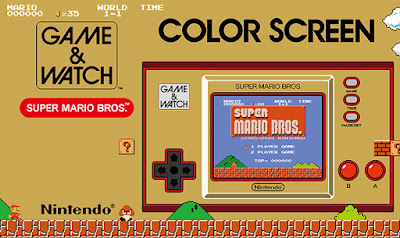
System Review: Game & Watch Super Mario Bros.

The Super Mario Bros. Game & Watch (not to be confused with the 1986 Game & Watch game of the same name) is a fun throwback by Nintendo that celebrates two of its best-selling products, the Game & Watch LCD handhelds and the Super Mario series.

Thankfully, LCD screen technology has come a long way since 1991 when the last Game & Watch system, Mario the Juggler, was released. Instead of the slow frame-by-frame gameplay in the classic Game & Watch systems, the new Game & Watch is full color and plays the Nintendo Entertainment System version of Super Mario Bros. faithfully through a custom emulator.

Adding to the fun, the Japanese Family Computer Disk System version of Super Mario Bros. 2, also known as Super Mario Bros.: The Lost Levels and Super Mario Bros. For Super Players, has been included. This game isn't as well known and is hard as nails, but it's great they included it in its original form.

It also includes a Game & Watch remake that blends the first Game & Watch game, Ball, with the last Game & Watch game, Mario the Juggler. This version of Ball mimics the former, with frame-by-frame graphics, but Mario is juggling the ball.

The game also comes with a fun clock that has Super Mario. Bros.-style graphics with various actions taking place around the displayed time. The neat thing about this is that the clock is tied to some easter eggs. If you view the clock at specific times in the day, different actions will appear on the clock. The most fun easter egg, however, is the one that takes place during the ninth hour, both in the AM and in the PM. When you play Ball at this time, Mario will be replaced by Luigi.

I'll be taking a look in-depth at the included games at some point in the future, but suffice it to say, this is worth the purchase, especially if you are a fan of the included games or just a fan of Mario in general. The games included, especially the first Super Mario Bros., are classics that are infinitely replayable. I won't fault you, though, if you just use it just as a clock. It is cute.

Final verdict:
5 out of 5

Saturday, October 1, 2022

System Review: TurboGrafx-16 Mini/PC Engine Mini


Hudson Soft, the designer of the TurboGrafx-16, became a wholly owned subsidiary of Konami in 2011. Hudson Soft ceased to exist in 2012, but its projects live on. With the success of miniature consoles from Nintendo, Sega, and Sony. Konami gave the TurboGrafx-16 a miniature update with the TurboGrafx-16 mini.

The miniature console is named the TurboGrafx-16 Mini in North America, PC Engine Mini in Japan, and PC Engine CoreGrafx Mini in Europe and Oceania. Konami went with M2 for the emulation, which was the same company that handled the Sega Genesis Mini. The emulator is not just for the TurboGrafx-16 console, but also the Super CD-ROM² and Arcade CD-ROM² add-ons, as well as the short-lived SuperGrafx. The emulation in this console is very accurate, which has always been a major strength of M2. 

The system runs on a Zuiki Z7213 system on a chip with a 1.3 GHz quad-Core Cortex-A7 central processing unit, a 500 megahertz dual-core Mali-400 ARM graphics processing unit, 256 megabytes of random access memory, and 4 gigabytes of flash storage.

The system comes with one two-button controller. The Japanese version contains fifty-eight games, while the international versions contain fifty-seven. This console has some of the best games of the 16-bit generation and is easily the miniature console that packs the best games in its library. It is truly quality over quantity, although the international versions have a lot of games that are still in Japanese.

The fifty-seven games in the international versions include Air Zonk, Aldynes: The Mission Code for Rage Crisis, Alien Crush, Alright! Gateball, Blazing Lazers, Bomberman '93, Bomberman '94, Bomberman: Panic Bomber, Bonk's Adventure, Bonk's Revenge, Cadash, Castlevania: Rondo of Blood, Chew Man Fu, China Warrior, Cho Aniki, Dragon Spirit, Dungeon Explorer, Evil Sword Necromancer, Fantasy Zone, Galaga '88, The Genji and the Heike Clans, Great Demon World Village, Galaxy Police Legend Sapphire, Gradius, Gradius II: Gofer's Ambition, J.J. & Jeff, The Legend of Valkyrie, Lords of Thunder, Military Madness, Moto Roader, Neutopia, Neutopia II, New Adventure Island, Ninja Gaiden, Ninja Spirit, Parasol Stars, Power Golf, Psychosis, R-Type, Salamander, Spirit Warriors Spriggan, Snatcher, Soldier Blade, Space Harrier, Splatterhouse, Spriggan Mark 2: Re-Terraform Project, Star Parodier, Super Darius, Super Momotarō Electric Railway II, Super Star Soldier, Victory Run, and Ys Book I & II.

The Japanese version contains the same game list except for Salamander and with the addition of Far East of Eden II: Manji Maru and Heartthrob Memorial.

As with the other mini consoles, I’ll be looking in-depth at the above games in the future, and the links will be updated accordingly. This console has finally put the TurboGrafx at the top of the heap. The emulation is excellent and the console is packed with great games.  I recommend the Japanese version as the two exclusive games are excellent and the arcade version of Salamander is now available through Hamster's Arcade Archives. If you modify your console to accept other games, you will get the most out of your console because a lot of these Japanese games have unofficial English fan patches.

Note: The USB wall plug is not included. Make sure you use one that is 5 volts, 2 amps (2000 mA). There have been reports of the system bricking itself if the wrong plug is used. 

Final Verdict:
5 out of 5

Tuesday, September 27, 2022

System Review: Sega Genesis Mini/Mega Drive Mini


After years of licensing the right to make retro consoles of their systems to AtGames, with varying results, Sega opted instead to design and manufacture the Sega Genesis Mini themselves. The emulation was handled by M2. 

Going with M2 for the emulation was the right call, as the emulator runs the game with no visual or audio differences from the original system, as far as I could tell.

The system runs on a Zuiki Z7213 system on a chip with a 1.3 GHz quad-Core Cortex-A7 central processing unit, a 500 megahertz dual-core Mali-400 ARM graphics processing unit, 256 megabytes of random access memory, and 512 megabytes of flash storage.

Outside of Japan, the system comes with two three-button controllers. The Japanese version comes with one six-button controller. It comes with forty games for the Genesis system. These games are excellently curated, as most of the games rank among the most fun games for the Sega Genesis.

The forty games include Alex Kidd in the Enchanted Castle,Alisia DragoonAltered Beast, Beyond Oasis (known as The Story of Thor: A Successor of The Light outside North America)Castle of Illusion Starring Mickey Mouse, Castlevania Bloodlines (known as Vampire Killer in Japan), Columns, Comix Zone, Contra: Hard Corps, Dr. Robotnik's Mean Bean Machine, Dynamite Headdy, Earthworm JimEcco the Dolphin, Eternal Champions, Ghouls 'n Ghosts, Golden Axe, Gunstar Heroes, Kid Chameleon, LandstalkerLight Crusader, Mega Man: The Wily Wars (known as Rockman: Mega World in Japan), Monster World IV, Phantasy Star IV, Road Rash II, Shining Force, Shinobi III: Return of the Ninja Master, Sonic the Hedgehog, Sonic the Hedgehog 2, Sonic the Hedgehog Spinball, Space Harrier II, Street Fighter II: Special Champion Edition (known as Street Fighter II Dash Plus: Champion Edition in Japan), Streets of Rage 2, Strider, Super Fantasy Zone, Thunder Force III, ToeJam & Earl, Vectorman, Virtua Fighter 2, Wonder Boy in Monster World, and World of Illusion Starring Mickey Mouse and Donald Duck

Mega Man: The Wily Wars was released on cartridge in Japan and Europe. North America only had access to Mega Man: The Wily Wars on the short-lived cable-based subscription game download service Sega Channel.

In addition to the forty listed above, the Sega Genesis Mini also includes two new ports of arcade games. The Darius port was developed by M2 and Hideki Konishi, while Tetris was a solo effort by M2. The Tetris port is based on Sega's arcade version. This is a new port and not the one that had an extremely small print run in the 1990s due to Nintendo holding the video game console rights for Tetris at the time.

The Japanese version of the system, the Sega Mega Drive Mini, also contains forty classic games and two bonus games. However, the game list is slightly different. It comes with Alisia DragoonAssault Suit LeynosCastle of Illusion Starring Mickey MouseColumnsComix ZoneContra: Hard CorpsDariusDyna Brothers 2 SpecialDynamite HeaddyThe Game's Crown CollectionGhouls 'n GhostsGolden AxeGunstar HeroesThe Hybrid FrontLandstalker, Langrisser II, Lord MonarchMonster World IVMUSHA, OutRun 2019, Party Quiz Mega QPhantasy Star IVPuyo Puyo 2, Puzzle & Action: Tant-R, Rent-a-Hero, Road Rash IIRockman: Mega World (known outside Japan as Mega Man: The Wily Wars), Shining ForceSlap Fight MDSnow BrosSonic the HedgehogSonic the Hedgehog 2, Sorcery Saga ISpace Harrier IIStreet Fighter II Dash Plus: Champion Edition (known as Street Fighter II: Special Champion Edition outside Japan)The Story of Thor: A Successor of The Light (known as Beyond Oasis in North America)Streets of Rage 2Strider, Super Fantasy Zone, The Super Shinobi, Sword of Vermillion, TetrisThunder Force III, Vampire Killer (known as Castlevania Bloodlines outside Japan), World of Illusion Starring Mickey Mouse and Donald Duck, Wrestleball, and Yu Yu Hakusho: Battle to Unite the Demon Plane

As with the Nintendo Mini consoles, I’ll be looking in-depth at the above games in the future, and the links will be updated accordingly. With this mini console, it is like a return to the days of old since Sega has once again rivaled Nintendo. The emulation is excellent and the console is packed with enjoyable classic games. Whether you get the Sega Genesis Mini or the Sega Mega Drive Mini, you'll get tons of enjoyment.

Final Verdict:
5 out of 5

Friday, April 17, 2015

Theresa Duncan's Games Are Now Playable Online

Last year, a successful kickstarter campaign ensured that the three adventure game storybooks aimed at young girls, created by Theresa Duncan (Chop Suey, Smarty, and Zero Zero), would be available for free online, for a minimum of one year.

Today, that goal has come to fruition, as the three games are now available online through emulation, and can be played in the player directly here.

Friday, May 31, 2013

ScummVM 1.6.0 Is Out Now

ScummVM, the program that lets you play classic adventure games on modern computers, consoles, phones, and tablets, has been updated with support for four new engines, bringing support for six new games: 3 Skulls of the Toltecs, Eye of the Beholder, Eye of the Beholder II: The Legend of Darkmoon, Hopkins FBI, Tony Tough and the Night of Roasted Moths, and The Journeyman Project: Pegasus Prime.

In addition to the new games, there's support for the Macintosh version of Discworld 1. On the LucasArts side, music has been improved in the Macintosh version of LucasArts adventures, and there are major bugfixes to the bike fight sequences on Old Mine Road in Full Throttle.

There are also other changes included as well, such as an update to the latest Roland MT-32 emulation code, a new grid chooser for save games, an extended FluidSynth configuration dialog, and Belarusian, Finnish and Galician translations for the GUI dialogs.

Sunday, October 27, 1996

Super Nintendo Emulation

Update 2 (7/9/97): SNES97 has also been discontinued, as it has been merged with SNES98 to create SNES9x. The first version of SNES9x is out now, and it has sound!

Update (4/16/97): VSWC has been discontinued, and is being integrated into SNES97.

VSWC - Originally Virtual Super Wildcard was for the Mac; But it has been ported to MS-DOS machines! - Smart Move!