Showing posts with label action-adventure video games. Show all posts

Monday, May 1, 2023

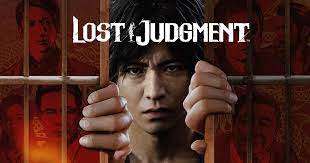
Open World Action-Adventure RPG Review: Lost Judgment


Update April 7, 2025: I neglected to update this with information about a Remastered version for PlayStation 5, Windows, and Xbox Series X/S. This version runs at sixty frames-per-second, has quicker loading times, and includes all of the downloadable content from the PlayStation 4 version.

Takayuki Yagami returns as a private detective in Lost Judgment, Ryu Ga Gotaku Studio's sequel to its action-adventure RPG, Judgment.

The Yagami detective agency goes to Seiryo High School on a small case that opens up much wider when a former student accused of bullying is murdered. Takayuki Yagami becomes an advisor for the Mystery Research Club so that he can investigate while having a legitimate reason to be on school grounds. He is once again aided by his partner, ex-yakuza Masaharu Kaito, as well as tech master Makoto Tsukumo and former theif Fumiya Sugiura, who have set up their own agency in Isezaki Ijincho named Yokohama 99.

The game takes place immediately following Yakuza: Like a Dragon, so Lost Judgment includes the usual Kamurocho as well as the area created for the former, Isezaki Ijincho. Since Yakuza: Like a Dragon had such a huge impact on the future of the series, it is really interesting to see what the yakuza characters are up to now without their clans.

As the story progresses, Tak comes face to face with a formidable villain that is just as skilled at both fighting and investigating as him, if not more so. This aspect was the best part of the game, as the villain was one of the best that Ryo Ga Gotaku Studio has ever produced. It also gave Takayuki Yagami, the Sherlock Holmes of the Judgment series, his own Moriarty.

As opposed to the turn-based combat in Yakuza: Like a Dragon, Lost Judgment features the direct-controlled brawler combat for which the Like a Dragon series became famous. Like in Judgment, Tak also uses his private investigator skills such as lock-picking, investigating scenes, and tailing suspects, to accomplish his tasks.

The school setting allows for a lot of minigames that Tak can participate in due to his role as a school advisor, including photography, dancing, competing in Virtua Fighter 5, robot fighting, and boxing. School missions will also unlock decidedly not school-friendly areas where Tak can date, race motorbikes, challenge gangs in skateboarding contests, and gamble.

As this is a Ryu Ga Gotaku Studio game, there are also a bunch of substories. Many include the wackiness for which the studio has become known. There are also more serious substories, especially regarding the Mystery Detective Club. It is well worth playing through that storyline, as the mystery of the identity of the Professor is one that is intriguing, has many unexpected twists and turns, and the payoff is well worth the effort put in to get to the finish line.

The Judgment series continues to be a worthy spin-off of the Like a Dragon series. Lost Judgment is better than the original game, with a more compelling villain, a memorable storyline, fun minigames, and fantastic substories. The morality of the ending is definitely up for debate, but the path to get there is well worth it. Lost Judgment is not just one of the best Ryu Ga Gotaku Studios games, but it is also one of the best games ever produced.

Final verdict:
5 out of 5
Judgment series

Wednesday, April 19, 2023

Open World Action-Adventure Mega Review: Shenmue II


Shenmue II was the sequel to the formerly Dreamcast-only Shenmue. It featured more locations than the previous game.

The original game took place in a single town, Yokosuka, Japan. In contrast, Shenmue II has three, including Hong Kong, Kowloon, based on the real-life Kowloon Walled City in Hong Kong, and Guilin, China.

The story picks up after Ryu Hazuki disembarks the ship that brought him from Japan to China at the port of Hong Kong. He almost immediately gets into trouble when a young boy steals his backpack. After managing to get it back with help from a young woman named Joy, he soon befriends the pickpocket, Xianweng "Wong" Ni, and makes a begrudging alliance with a gang member named Wuying Ren.

He will need all the help he can get to obtain more information about his father's killer, Lan Di, as well as to get more information about the mysterious mirror that his father left for him when he died. He'll find himself opposed by several people on his quest for information, including members of a gang known as Heavens, an extremely large and strong gang leader known as Dou Niu, and a transgender woman known as Yuan.

As is often the case with transgender characters in their localization from Japan to the West, especially in 2002, the character had a change of pronouns as well as voice actors. I appreciate that the translation lost the hurtful misgendering and was referred to properly as she, however, I am divided over the fact that she lost her deeper voice for a less ambiguous female voice. I wish that the character had remained obviously transgender in the translation, however, the character was portrayed with a stereotypical gay voice, so it really isn't really a loss to get rid of that voice acting in the long run.

Speaking of voice acting, like the original Shenmue, the best way to experience this game for native English speakers is with Japanese voice acting with English subtitles. The English voice acting remains wooden and not pleasant at all. The Japanese voice acting sounds more natural. This is likely not just due to the voice actors, but because of the text as the English translation is lacking nuance again and is really dry compared to the original Japanese text. It's alright reading the translation that way, but it doesn't translate well into the spoken word.

This game is a lot longer than the first and more action-packed. However, a few things let it down. Earning money through lifting and moving crates is not as fun as the forklift of the original game. Unfortunately, it is necessary to earn a lot of money, since Ryo needs to pay his way into three martial arts challenges in order to get the information he needs.

Also, this game goes way too far, in my opinion, with the button-pressing quick-time events. This is especially the case in the last fight, where it is possible to lose the fight just by not getting the quick time event correct even after properly beating the snot out of him. It's frustrating to repeat scenes like this if, like me, your fingers and brain don't cooperate well since the amount of time given to complete the QTEs is woefully small.

Shenmue II is larger and has more action than the original game. However, it is let a bit down due to the lackluster way to earn money as well as the overabundance of quick-time events. It also has poor English voice acting, but the Japanese voice acting is much better. So, the best way to experience this game, if you choose to do so, would be to avoid the original Xbox version as it only has English voice acting. The Dreamcast game only has Japanese voice acting, and the high-definition version by d3t has selectable voice acting. In the end, the story is interesting, so it is worth experiencing if you want to continue Ryo's quest to find his father's killer.

Final Verdict:
4 out of 5

Shenmue reviewShenmue I & II review coming soon

Saturday, March 11, 2023

Action-Adventure Review: The Legend of Zelda: A Link to the Past

After the release of the side-scrolling action RPG, Zelda II: The Adventures of Link, the Super Nintendo Entertainment System follow-up went back to the formula that made the original game so popular.

The Legend of Zelda: A Link to the Past was a top-down action game much like the original The Legend of Zelda. However, it added many elements that made it the superior game. The story was expanded from the first game's plot. It started off similarly in that the legendary hero Link had to find the powerful Master Sword so that he could rescue Zelda, the princess of the Kingdom of Hyrule.

However, it soon became a much different game when the evil wizard Agahnim accomplishes his goal of sealing the Sacred Realm thus keeping that world plunged into darkness. Now Link has to travel back and forth between the Dark World and the Light World to rescue the young maidens descended from the seven wise men so that they can break the seal.

Unlike its predecessors, A Link to the Past included a world map that could be accessed at any time with the press of a button. This makes it a lot more fun because you don't need to memorize areas or create or use paper maps. It also has new items Link can acquire, such as boots that will allow him to run across areas with his sword stuck out. This makes the game less tedious because you can move quickly across areas.

Music has always been a strong point in The Legend of Zelda games, and A Link to the Past is no exception. It has great, memorable new music as well as a fresh take on the overworld music that uses the extra instruments that are available with the SNES sound chip. The graphics also are pleasing as they take advantage of the upgraded technology available in Nintendo's 16-bit powerhouse.

The Legend of Zelda: A Link to the Past improves upon its predecessors in every way. From the great art style and excellent music that takes advantage of the technological leaps between 8-bit and 16-bit hardware, to the larger worlds and an overhead map to make those worlds more enjoyable, A Link to the Past is leaps and bounds above the games that came before.

Final Verdict:
5 out of 5

Wednesday, March 1, 2023

Action-Adventure Mega Review: The Legend of Zelda

The Legend of Zelda was an action-adventure game that takes what had been done right in the genre before and adds enough new elements to set the standard going forward.

The Famicom Disk System received The Legend of Zelda first, followed by the Nintendo Entertainment System version, then the Famicom proper. The NES and Famicom version has fewer instruments. However, the music survived intact when brought over, as the music is fantastic, is memorable, and is still being used in motifs within the current games in The Legend of Zelda series. The other change is that the NES didn't have a microphone, so a microphone trick to defeat an enemy doesn't work in the later NES and Famicom versions. The secret way to beat the enemy changes depending on the version played but can be beaten using a sword without knowing the secret.

The story is about a legendary hero known as Link who has to save the princess of Hyrule, Zelda, from the evil Ganon. He does this by collecting all of the shards of a golden triangle object of great power known as the Triforce of Wisdom. The Triforce pieces are guarded by bosses in dungeons spread throughout the land of Hyrule. The dungeons can be visited directly in some cases, while they have a puzzle that needs to be solved in another. Alongside a Triforce piece, each dungeon also has a treasure hidden inside that will give Link new items such as a raft that can travel across the water in spots where docks are present or a ladder that can go over gaps. These items, as well as items purchased in shops with rupees which are sometimes dropped by enemies or found in caves, can be used to get into dungeons and traverse those dungeons once inside.

The ways to discover the dungeons range from simple exploration to keeping an eye open for areas that can be used with items, to using cryptic words spoken by the townsfolk as clues on what to do next. The overworld and dungeons are full of interesting, odd, and colorful enemies. If Link has a full heart bar, which increases by collecting heart pieces, the sword lets out a beam that can kill enemies from a distance. This helps to give an advantage in battle. The game is tough, sometimes even if you know enemy patterns, so saving and loading using emulators such as the Virtual Console or the NES emulator that is available with a Nintendo Switch Online membership is my recommended way to experience this classic.

The Legend of Zelda set the bar for two-dimensional games in the series, from the overhead perspective to dungeons, items, and enemies. It has since been surpassed by later games that make the game more intuitive, so it is not as impressive as it once was. However, as a torchbearer for the action-adventure genre, it is absolutely worth playing at least once.

Final Verdict:
3½ out of 5

Wednesday, February 22, 2023

Action-Adventure Game Compilation Review: The Legend of Zelda: Collector's Edition


It's not common, but Nintendo occasionally releases compilations of their video games on physical media. That is the case with The Legend of Zelda: Collector's Edition for GameCube, which has become highly sought after in recent years.

It contains four classic action-adventure games in The Legend of Zelda series across two different platforms. The Legend of Zelda and Zelda II: The Adventure of Link are Nintendo Entertainment System games while The Legend of Zelda: Ocarina of Time and The Legend of Zelda: Majora's Mask, are Nintendo 64 games. 

These games were not ports as they were presented through emulation. The Nintendo Entertainment System emulator was previously used in Animal Crossing while the Nintendo 64 emulator was previously used in The Legend of Zelda: Ocarina of Time and The Legend of Zelda: Ocarina of Time - Master Quest compilation.

The Nintendo Entertainment System emulation is fantastic, as the games play nearly identically to the original releases. The differences include changes to reduce the amount of flickering to prevent seizures and numerous translation corrections in The Legend of Zelda. These changes were originally made for the Classic NES Series for the Game Boy Advance.

The Nintendo 64 emulation, however, isn't quite up to par. There are slowdowns in both games, which can be forgiven as the Nintendo 64 was only one console generation behind the GameCube. It is honestly quite impressive the emulator runs the games as well as it does. Less forgivable, however, is the fact that Majora's Mask is known to be prone to crashes.

The compilation also contains two videos. One is an advertisement for The Legend of Zelda: Wind Waker while the other is named The Legend of Zelda: A Respective. The latter video includes logos and gameplay from all of the games in The Legend of Zelda series that were released up to the point of its release in 2003. As it includes only the games that Nintendo deems part of the series canon, there aren't any outliers included here such as the CD-i games.

The Legend of Zelda: Collector's Edition was a great compilation in its time as it included four The Legend of Zelda games in one package. The Legend of Zelda and Zelda II: The Adventures of Link are emulated remarkably well, and the localization fixes and flicker removal in the first game are a welcome inclusion. However, the Nintendo 64 games, The Legend of Zelda: Ocarina of Time and The Legend of Zelda: Majora's Mask, are not as well emulated. The crashes in the latter make this compilation more of a collector's item than a way to play the games. All four games have been emulated in re-releases much better in the years following this compilation. The video advertisement for Wind Waker and The Legend of Zelda: A Retrospective are really barebones and aren't enough to make this compilation worth recommending.

Final Verdict:
3 out of 5

Thursday, February 16, 2023

Open World Action-Adventure Demo Review: What's Shenmue?


What's Shenmue? is the Dreamcast demo for the open-world action-adventure RPG, Shenmue. Released in 1999, it's my favorite type of demo, which is one that demonstrates a game's characters, locations, and gameplay, but has its own unique storyline.

Like Shenmue, What's Shenmue? takes place in Dobuita street in the city of Yokosuka in Kanagawa Prefecture on the island of Honshu. In the demonstration, Ryo Hazuki has to locate Hidekazu Yukawa, who was the Senior Managing Director of Sega at the time.

The demo includes all of the gameplay mechanics found in the Shenmue games, such as asking people for information, chasing suspects, and quick-time events that appear as button prompts that have to be hit at the correct time.

Ryo has to ask people from the game proper if they had seen Mr. Yukawa including Tom the hotdog vendor and Nozomi Harasaki, the granddaughter of the woman who runs the flower shop. Because Shenmue I and II were developed concurrently, Ryo also can talk to people who would not appear until Shenmue II such as Izumi Takano, the teenage Tomato store clerk who blocks an area that is only accessible in the full game.

The storyline is simple, yet it reflects an actual scene in Shenmue which will be obvious to anyone who played the full game. Even though it contains a common trope, the ending is satisfyingly wacky and works well as it does make you want to play the full game.

What's Shenmue? was only released in Japan, so it is only available in Japanese. However, fans from the Shenmue Dojo forums released a Japanese-to-English translation patch. The fan patch is well done so it is a satisfying way to experience the demo.

Final Verdict:
4 out of 5

Shenmue review

Thursday, November 24, 2022

The Winter Soldier Comes To Avengers On November 29


Avengers, the action game by Crystal Dynamics, is getting an update on the 29th of November. This will add Bucky Barnes, the Winter Soldier, to the game. It will also add the cloning lab, a new Omega-level threat.

It's currently on sale for Black Friday. You can pick it up for half-off at Best Buy.


Sunday, September 25, 2022

Action-Adventure Mega Review: Teenage Mutant Ninja Turtles


Teenage Mutant Ninja Turtles was the first game based on the quartet of pizza-loving sewer dwellers. It was also Konami's first game based on the property. The end result missed the mark in nearly every aspect, but it did lay the groundwork for the much more beloved games that followed.

If there was ever a game that I wondered how on earth I managed to complete as a child, this was it. The game starts out on an overhead map. You can change between turtles whenever you like by hitting the start button. These are the best parts of the game. The game goes downhill from there. Once you enter the sewer, the game switches to an action platformer. The problem is that jumping feels off and the level design is hit-or-miss. When it misses, it really misses. You can control the height of your jump with light button taps, but often the level will put a ceiling between where the turtle is and the platform to which he has to jump. This leads to infuriating sessions where the current area has to be completed again since the enemies respawn. The Cowabunga Collection minimizes hair-pulling as it has a rewind button. This is definitely the preferred way to play, as even seasoned platformer players will fail to make a jump at least once in the game.

The other infuriating thing is that Donatello and Leonardo are the only useful turtles. Michaelangelo and Raphael have a very small range compared to the two aforementioned ninja-practicing testudines. The best thing to do is to leave Raphael and Michaelangelo for areas where it is nearly impossible to not lose health. 

This brings us to the worst part of the game, the dam section. Without the save function of the Cowabunga Collection, I would not blame anyone who rage quit after trying this level. Heck, I wouldn't blame anyone who rage quit even with the save function. The turtles have to swim through a maze to disarm eight bombs in only eight minutes. Impeding them are electric beams and electrified seaweed. The latter is the worst part as it is nearly impossible to make it through without hitting seaweed since the path is so narrow and pressing the swim button causes the turtle to rise up quite a large amount. Also, the time limit makes careful swimming impossible. The time limit also makes waiting for the electric beams to stop a challenge. It's nearly impossible to make it through without draining the health of one, or likely two, turtles. That is why it is best to save the weakest turtles in this game, Michaelangelo and Raphael, for this level.

The overhead level actually becomes quite a bit of fun when you get to the point where you can drive the party wagon. Walking enemies can be run over and vehicles can be hit with bullets shot out from the wagon. Once you get the missiles, you can destroy enemy vehicles with one hit. It's tempting to just fire away at vehicles with missiles, but there are also blockades that can only be destroyed with missiles. Sadly, the fun overworld driving sections only last for one level, and most of that level is spent going in and out of sewers and buildings searching for missiles and grappling hooks that you will need to get to sections that can't be jumped across. With these sections being platforming sections, the fun of the overhead section is quickly overshadowed.

Alongside the Nintendo Entertainment System version, it was also released for Amiga, Amstrad CPC, Arcade via PlayChoice-10, Atari ST, Commodore 64, DOS, MSX, and ZX Spectrum. Some of these versions have more appealing graphics, but the platforming sections are surprisingly even less responsive. This makes the NES version the best of the bunch, which isn't saying much.

The one bright spot of this game is the music. Even though there are mainly only two musical scores for the overhead and underworld levels, with the exception of some new music in the final level, they are really great and can get stuck in your head well after the game is over. When I was a little girl, I would just stand in place on the overhead map or hang out in an enemy-free part of the sewer just to hear the music.

Teenage Mutant Ninja Turtles is probably best summed up as a game with some good ideas that are poorly implemented. Some of the ideas, such as the spin attack powerup would make its way into better Konami games such as Turtles in Time and Hyperstone Heist. Other than the music and the short overhead sections, there's not much to recommend. It would be a mediocre game, but the terrible dam level takes it even lower. Unless you're playing with the emulator functions in Cowabunga Collection, don't bother playing it. Even with the collection, there's really no point playing it unless you want to earn the achievement for doing so.

Addendum February 12, 2026: There is also an arcade version for the PlayChoice-10. This version is identical to the NES version, except there is a time limit in place where the game will quit when time runs out. 

Final Verdict:
1½ out of 5

Teenage Mutant Ninja Turtles: The Arcade Game Review

Tuesday, September 13, 2022

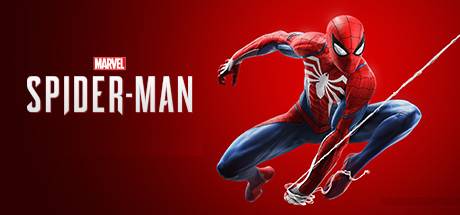
Open World Action-Adventure Mega Review: Spider-Man


There have been many great Spider-Man games over the years. However, Insomniac's Spider-Man changes up the mix a bit, with a more experienced Spider-Man, playable Mary-Jane Watson and Miles Morales stealth sections, and a mix of iconic and lesser-known characters in Peter Parker's rogues gallery. 

Spider-Man uses the mechanics from the Batman: Arkham games with the addition of climbing on walls and webbing. It is this final factor that makes the game really enjoyable and sets it apart from its inspiration. It is really fun to web up thugs, and super enjoyable to swing around town. Swinging is the mechanic that will make or break a Spider-Man game, and this one delivers. It also adds a mechanic to make Spider-Man's swinging zippier. The zip web is thrown in front of Spider-Man, causing him to zip forward. Spider-Man also makes new gadgets as the story progresses which can be used in combat. It's fun to use the web bomb to web up enemies and then use the concussive blast to throw them back and stick them to walls.

The Arkham mechanics work well because, in both the game and the comics that inspired it, Spider-Man is a lot like Batman. He is also a genius that makes gadgets and has a suit lined with electronics. For the things that Spider-Man doesn't have, such as a bullet-proof suit and a grappling gun, Spider-Man makes up for it with a healing factor and his web shooters.

Alongside the Spidey missions are story beats where the plot switches to the Daily Bugle reporter Mary Jane Watson and the teenage coder Miles Morales. As she is Peter's on again, off again girlfriend, M.J. Watson is in close contact with Spider-Man, and as a reporter, she proves invaluable in finding evidence. Stealth is the key in these sections of the story, as both characters have to get in and out of situations without being caught. These sections are a controversial part of the game, but personally, I enjoyed them a lot. I just wish there were more M.J. stealth sections, not just because Miles Morales got his own game by Insomniac, but also because they are more fun. Once M.J. gets the ability to shock enemies unconscious, the stealth sections become quire enjoyable.   

The story sees Peter Parker working for Otto Octavius working on mechanical arms for people who lost their own. As time allows, he also helps his Aunt May, who works at the F.E.A.S.T. shelter. The charity, founded by a businessman named Martin Li, is so named as it provides resources for food, emergency, aid, shelter, and training.

In addition to his obligations as Peter Parker, he also patrols the city as Spider-Man. This version of Spider-Man takes its Batman inspiration further as he works with a contact in the police department. Yuri Watanabe is a great addition to the Spider-Man lore, as she is a wonderfully complex character and not just a cookie-cutter police chief.

Fans of the comics and films will be happy, as the story includes Spidey staples such as Kingpin, Doctor Octopus, Vulture, Electro, Rhino, Scorpion, Black Cat, Taskmaster, and Norman Osborn. It also has lesser-known villains such as Mr. Negative, Shocker, Hammerhead, Silver Sable, and the obscure villain, Screwball. Mr. Negative, in particular, is a very compelling villain that I hope makes it to the big screen someday.

The presentation is excellent. It has moments of cinematic action, which are very reminiscent of the Uncharted series. Many are quick-time events that provide precise button pushing, but the prompts stay on screen for a while, so, thankfully, they aren't a challenge. The visuals are quite realistic, even in the original PlayStation 4 version. The textures and models in the remastered version are improved and sometimes changed, especially Peter Parker who is completely redesigned. The former actor for the face of Peter Parker, John Bubniak, has been recast to Ben Jordan (no relation to the paranormal investigator). This was done to better match the facial performance capture of Yuri Lowenthal. Both versions are excellent. I, personally didn't notice a difference in the facial movements of either actor, but your perceptions might be different than mine. The rest of the actors are excellent as well, especially Watanabe's voice actor, Sumalee Montano. Her vocal performance helps a lot in making Yuri Watanabe a compelling character.

Insomniac's Spider-Man is Spidey's best game so far. With great visuals, interesting characters, fantastic voice acting, fun cinematic staging sequences, and cinematic music, it is worth playing both for people who are fans of the comics and films as well as people who only have casual knowledge of the web-slinger. 

Final verdict:
5 out of 5

Spider-Man
Spider-Man 2 (2004 film) Review
Spider-Man 2 (2023 video game) Review Coming Soon

Marvel Multiverse
Guardians of the Galaxy (2021 video game) ReviewSpider-Man 2 (2023 game) Review Coming Soon

Tuesday, October 1, 2019

Open World Action-Adventure Mega Review: Shenmue


This review was originally posted on the McMurray Internet Channel website on February 21, 2019.

Shenmue is undoubtedly an influential title in the history of video game development but, while it still does mostly hold up decades after its original release, it's bogged down by a few things that have been refined in later titles.

Shenmue was created by Sega designer Yu Suzuki to address problems that he saw in the role-playing genre in the 1990s, in order to create a game that would feel more realistic than what came before. He coined a new term for the genre of the game he created, FREE, or Free Reactive Eyes Entertainment. It combined aspects of role-playing games, graphic adventure games, and even fighting games using the Virtua Fighter 3 engine.

The game follows a seventeen-year-old Japanese boy named Ryo Hazuki, who witnesses the murder of his father by a mysterious man named Lan Di, who claims that he was seeking vengeance, as the elder Hazuki had murdered his own father. Not believing that his father could be a killer, and wishing to seek vengeance himself for his father's death, Ryo begins asking around his home city of Yokosuka, Japan, in an attempt to discover where Lan Di was from, and where he had headed after he murdered Ryo's dad.

The painstaking detail in the recreation of 1986-era Yokosuka is Shenmue's greatest strength. Even the weather patterns match up with the real weather in the city in 1986. The attention to detail extends to the characters as well.  Every non-player character can talk to Ryo. Every business with an hour of operation sign can be entered when the business is open. The city even includes an arcade that contains the classic 1980s arcade games created by Yu Suzuki, Hang-On, and Space Harrier. Bars, stores, and other buildings also let Ryo collect gatcha capsule toys, play billiards and darts, and try his luck at pachinko. These are side activities that Ryo can play when not furthering the main story, however, there are also scrolls that can be purchased to give Ryo new moves that he can use in the fighting sections of the game.

The game has a lot going for it, as it has an interesting cast of characters, an interesting story, and wonderful music, and it contains an interesting combination of adventure and fighting mechanics. It looked fantastic when it first released in 1999 and still looks decent today, especially in the recent Shenmue I+II compilation.

However, its biggest drawback has always been the English voice acting. It is dreadfully wooden and is a bear to drudge through. Luckily, the aforementioned Shenmue I+II collection includes the ability to combine the Japanese voice actors with the English script. This makes the game quite enjoyable and well worth playing, as long as you don't mind the outdated tank controls and the slow-paced gameplay in comparison to modern open-world games.

Final Verdict:
4½ out of 5

Wednesday, August 22, 2018

Shenmue I & II is Out Now

Shenmue I & II, the compilation disc of enhanced ports of Shenmue and Shenmue II, is out now for Windows on Steam, PlayStation 4, and Xbox One.

Shenmue I now has improved camera control due to the addition of the second thumbstick. Shenmue II has the additional features of the Xbox port but does not have the excessive motion blur. Both games render at 1920x1080 resolution at 30 frames per second, and the resolution can be increased on the Windows version. The game can be rendered at a 16:9 or 4:3 screen ratio, although the cutscenes are still rendered at a 4:3 ratio.

Both English and Japanese voices are available, as are modern graphics features such as anti-aliasing, bloom lighting, better texture filtering, and warmer colors due to the increased bit-depth from the original 16-bit depth on the Dreamcast.

Wednesday, May 16, 2018

Shenmue III Delayed Until 2019

The much-anticipated continuation of the saga of Shenmue by series creator Yu Suzuki's Ys Net has been postponed until 2019.

Shenmue began on the Dreamcast in 1999 and Shenmue II will be released on the Dreamcast and Xbox a few years later. Both of the original two games will be released in high definition on Windows, PlayStation 4 and Xbox One later this year.

Shenmue III has been postponed, according to publisher Deep Silver, to give the project extra time which will be "used to polish the quality of the game even further, to the high standards it deserves and release the product in the best possible timeframe".

Sunday, October 4, 2015

Free Action-Adventure Review: Mr. Smoozles Goes Nutso

Mr. Smoozles Goes Nutso is a unique blend of an clsssic arcade style action game blended with classic adventure inventory puzzles. It's a strange mix, but, surprisingly, it works well.

The game takes place in the universe of the Mr. Smoozles webcomics by Steve Ince. Aliens are slowly eliminating the Earth from existance, and on top of that, they've brain washed Mr. Smoozles. Now Ed has to evade Mr. Smoozle's deadly laser beams while interrogating people and solving the puzzles of the mansion in order to put things back to the way they were.

The art style follows the style of the webcomic quite closely, which is a good thing, as the comic has a bright, cuteart style that ends up juxtaposing the danger of the situation, and makes for a good combination. The story is top notch, which shouldn't be a surprise, as Steve Ince is well known for his adventure game writing, from his days at Revolution Software to more recent titles such as So Blonde. There is no voice acting, but the game's script works well enough on it's own, and the fantastic arcade style soundtrack successfully fills the needs in the audio department.

The action can be tense, as is the case for any arcade style action game. Ed has to avoid Mr. Smoozles, who patrols the mansion with a laser pistol, and must also avoid obstacles such as mines and machines. Ed also has to retrieve items in the mansion, sometimes in exchange for another item, and sometimes to get to new places. It's standard adventure game fare, but it's actually quite amazing how well this laid back style of talking to characters, collecting items, and solving puzzles blends with the fast paced action sequences.

If you don't mind a lot of action in your adventure games, you probably would enjoy Mr. Smoozles Goes Nutso. It has an intriguing story with a good dose of humor, a charming art style, fun puzzles, adrenaline pumping arcade sequences, and a soundtrack that suits the arcade style of the game nicely. It's also now available to download and play free of charge, so it's well worth giving it a play.

Final Verdict:

4 out of 5