Showing posts with label platform game. Show all posts

Saturday, February 28, 2026

Platform Game Compilation Review: Donkey Kong Classics


Donkey Kong Classics compiles the Nintendo Entertainment System ports of the first two Donkey Kong arcade games, Donkey Kong and Donkey Kong Junior, into one multicart. 

As noted above, the two most popular games in the original trilogy were both included, which is great since they were the best in the series up to the time of this multicart's release in 1988. It does not include Donkey Kong 3, which likely contributed to that game becoming lesser known than the others.

Donkey Kong was a solid conversion of the arcade game. However, since it was also an early release before mappers extended the capabilities of the Nintendo Entertainment System, it lacks the cement factory stage. That stage would not be added to the Nintendo Entertainment System version until Donkey Kong Original Edition was released for the Virtual Console for Wii in 2010 and Nintendo 3DS in 2012.

Donkey Kong Junior, on the other hand, survives in-tact in its conversion from arcade to NES. Although it was also an early NES game, all of the levels are here. The only real difference, as with Donkey Kong, is the change from a vertically-oriented arcade monitor to the horizontally-oriented, nearly square resolution of the NES hardware.

The multi-cart has one small difference in the games. The title screen in both games are replaced by a single blue Donkey Kong Classics title screen. The games can be selected via the right and left buttons on the NES controller, and the number of players can be selected via a menu below the game select area. The neat thing about this change is that the title screen music from the two games are alternatingly played on the multi-cart's title screen.

Donkey Kong Classics is an interesting compilation of the Nintendo Entertainment System conversions of the first two Donkey Kong games. Unlike Nintendo's earlier multi-carts, such as the Super Mario Bros. / Duck Hunt pack-in cartridge, the menu is not silent. The games lack title screens, in favor of a single title screen that controls the options of both games. This isn't a bad thing, especially since the title screen music from the both games are alternated on the multi-cart menu. It's a shame that Donkey Kong 3 wasn't included, but the game was the weakest of the original trilogy, so its exclusion is not a big loss.

Final Verdict:
3 out of 5

Friday, February 27, 2026

Platform Game Compilation Review: Disney Classic Game Collection


Disney Classic Games
is a compilation of four classic games based on Disney animated films. It contains both the Virgin Games version of Aladdin as well as the Capcom version. It also includes The Lion King by Westwood Studios and The Jungle Book by Eurocom. The emulation in the compilation is handled by Digital Eclipse.

It is actually an updated version of Disney Classic Games: Aladdin and The Lion King. This time around, they popped in a bonus game, the Eurocom version of The Jungle Book. Game Boy, Sega Genesis, and Super Nintendo Entertainment System versions are included.

The big draw of the updated version is one that rectifies the most controversial part of the compilation. The two most popular versions of Aladdin, the Virgin Games version, which was primarily released on the Sega Genesis, is included alongside the Capcom version, which was primarily released on Super Nintendo Entertainment System. The original compilation only included the Virgin Games version. The Sega version has still not been included, but that one doesn't top most of the best of the 1990s games lists.

Like the original compilation, the Virgin Games adaptation of Aladdin includes both the Sega Genesis and Game Boy versions. The Capcom adaptation includes the Super Nintendo Entertainment System version. The prototype version of Aladdin that was compiled the same month as the version that was demonstrated at the Summer Consumer Electronics Show in 1993 is also included, which is worth playing as it is different from the final release.

The notoriously difficult video game adaptation of The Lion King by Westwood Studios is once again included. The Super Nintendo Entertainment System, Sega Genesis, and Game Boy versions are included. Emulation gives the ability to rewind and save game play states. This is a boon for all of the included games, but it is especially true for The Lion King. I wore out my hands and my brain from beating this game as a little girl. I really appreciate Digital Eclipse's emulator, as it was not as hard to reclaim Pride Rock this time around.

The Disney Classic Games Collection is a fantastic update of an already excellent compilation of 1990s platform games. The emulation is really great, as is expected from a Digital Eclipse release. Saving and rewinding are a blessing when playing these retro games. The Aladdin adaptation by Virgin Games and the Westwood Studios adaptation of The Lion King play just as well as in the previous version of this collection, Disney Classic Games: Aladdin and the Lion King. The addition of Eurocom's The Jungle Book is a neat little extra, but Capcom's version of Aladdin is the big draw here. Even better, people who own the original can also get the new version of the compilation as DLC. It's worth purchasing or upgrading as Capcom's version of Aladdin is worth it all on its own.

Final Verdict:
4½ out of 5

Wednesday, February 25, 2026

Platform Game Review: Chip 'n Dale Rescue Rangers


Chip 'n Dale Rescue Rangers was a platform game by Capcom. The Japanese video game developer proved that they could make an excellent game based on a Disney Afternoon series and they continued to prove that with the release of this game.

The plot sees the villainous Fat Cat kidnap Gadget so that she has to work for him. Up to two players, with Chip as player one and Dale as player two, take off to rescue her. They travel along a rodent-sized world picking up blocks and crates half their size and shooting them at enemies that they encounter.

They can also duck to hide inside of the crates to keep themselves unseen by enemies until they can get a chance to attack them from behind or merely avoid them altogether. Along the way, they will find hazards other than enemies such as electric surges from powerlines.

The chipmunks will sometimes get help from the other Rescue Rangers. Monterey Jack will break down some barricades, enabling the duo to get to places they otherwise couldn't. Finding and interacting with Zipper will grant temporary invincibility. Even Gadget, despite being held captive, will provide advice at the beginning of each area.

Capcom's Disney games always looked amazing, and this game is not an exception. The art staff was once again given art assets by the Disney animators so that the character sprites of both the heroes and the villains remained true to the series. As with DuckTales before it, this allowed the animations to be very expressive.

The music and sound effects are also up to the level of Capcom's other Disney output. The sound effects provided as memorable sounds as were possible with the NES audio hardware, while the music was fantastic. The Chip 'n Dale Rescue Rangers theme was faithfully translated to the trademark boops and beeps of the classic Nintendo 8-bit hardware, and each piece of stage music matched with the action well.

Chip 'n Dale Rescue Rangers was another Disney hit by Capcom, and it was well deserved. The level design, music, and sound effects were excellent. The sprite work, as supervised by actual Disney animators, was absolutely fantastic. The animations are very expressive, and stand up with the best of Capcom's output for the Nintendo Entertainment System. If you are a fan of Disney, platformers, either, or both, you should try this game.

Final Verdict:
4½ out of 5

Tuesday, February 24, 2026

Platform Game Review: DuckTales 2


DuckTales 2 was the sequel to the phenomenal DuckTales by Capcom. Because it was released late in the lifespan of the Nintendo Entertainment System, it didn't sell as well as the first game and is lesser known as a result. This is a shame because DuckTales adds in features that were not in the original.

The story is standard Disney duck universe fare. Huey finds a piece of a treasure map drawn by Scrooge's father Fergus McDuck. 'The pieces of the map are scattered all around the world, so Scrooge goes to each spot to find them. Scrooge's archenemy Flint Glomgold is searching for the treasure as well.

The memorable sound effects returned, and the music was of the same high quality as well. There's no moon level song with soaring motifs, but the music that is here certainly meets the standard of the other songs in the previous DuckTales game. There is also a map now for level selection, and the map screen music is quite enjoyable all on its own.

The levels are just as well laid out as in the previous game. Scrooge still has his usual skills. He can jump normally or jump higher with his cane. His cane can also allow him to jump on some surfaces that would normally hurt him. Scrooge can use his cane to whack items like treasure chests, but now he can swing while jumping. 

DuckTales 2 also adds in a new use for his trusty cane. It can be used to hook onto objects that Scrooge can hang on or to pull levers and objects. This gives the game more creative ways to conceal areas, put ledges out of reach of normal jumps, and hide treasure. The new hook abilities makes them more challenging, but not overly so. The hanging hook parts are a lot like Darkwing Duck, and they work as well in this game as they did in that one.

DuckTales 2 is a lesser-known sequel that suffered its fate due to its late release in the lifespan of the original Nintendo Entertainment System. It certainly didn't deserve to be underplayed. It's new jump swing and hoop grab and hanging abilities with Scrooge's cane adds a lot to the formula. It's level design, music, and sound effects are just as engaging as the first game. If you enjoyed Capcom's DuckTales, you owe it to yourself to try DuckTales 2.

Final Verdict: 
4½ out of 5

Saturday, February 21, 2026

Platform Game Review: Commander Keen - Invasion of the Vorticons: The Earth Explodes


The Earth Explodes is chapter two of Commander Keen: Invasion of the Vorticons, a three-episode platform game developed by iD Software and published by Apogee Software.

Commander Keen flies his Bean-with-Bacon mega-rocket home from Mars, only to discover that the Vorticons have a cannon aimed at Earth. Commander Keen must go to the Vorticon mothership to stop the destruction of his planet. 

Episode two continues Commander Keen’s fight with the Vorticons, as he explores the caves of the Vorticon planet, does battle with the top Vorticon ninja fighters, and discover the secret of the Grand Intellect.

Compared to the first episode, this one does have a steep difficulty curve. The levels are harder both in terms of enemies as well as in terms of level design. When I played this game as a little girl I got stuck near the end because I couldn't traverse one of the later levels. Even as an adult, I had to check YouTube for the way to the exit. There's only one level that is truly that dastardly, but it does bring the quality of the game down a bit as it's never fun to fight against the design of the game.

Commander Keen: Invasion of the Vorticons is the second episode of a trilogy, but sadly it is not as well designed as the first. It has a steep difficulty curve, and one level in particular is difficult to get through without an external guide. As this is part of a trilogy of games based on the same engine, the lack of music is one of the real drawbacks in this game. Like the first episode, however, this is solved by using the excellent fan-produced music pack in the modern interpreter of the game, Commander Genius.

It pains me to say it, as I love the Commander Keen series, but this episode is just not worth playing unless you want to play through the entire trilogy. The other two episodes are better than this one, so it's worth picking up the trilogy bundle, but I would recommend giving this one a pass.

Final Verdict:
2½ out of 5

Saturday, February 14, 2026

Arcade Platform Game Review: Popeye

Valentine's Day is here, so what better arcade game to celebrate the day than Popeye? It is the arcade game that Nintendo designer Shigeru Miyamoto was finally able to create after the plans to make a game based on the Popeye series earlier fell apart and was reworked into Donkey Kong. The Popeye we did receive doesn't quite reach the heights of Mario's premiere, but does have its own charm.

The graphics capture the look of the characters quite well. The sprites are large and expressive, and the animation is well done. This is especially true of the animation of Bluto reaching under a platform to try to knock Popeye into the water. That's still the image that immediately pops into my head decades after the game was released. It's just that well animated.

Like the Popeye comics and shorts that inspired it, Popeye tries to earn the love of Olive Oyl while avoiding the aggression of the competitor for Olive's heart, Bluto. Olive Oyl throws out hearts, and Popeye catches them. When the hearts completely fill up the Popeye-tagged house at the top of the playing field, the game will go to the next level. Other levels swap out the hearts for other items such as musical notes, and letters spelling out the word help.

There are three unique levels that repeat at higher difficulties as the game goes on. These include the docks, a village, and a pirate ship. These three levels will include some of the secondary characters from Popeye media including Swee-Pea, Wimpy, and the Sea Hag. It really is a visual treat for fans of the Popeye franchise.

Popeye has several ways to fight back against Bluto. He can punch an object that will drop on top of his nemesis. The most fitting way to fight back is using the spinach cans that appear on the side of the platform, much like the hammers in Donkey Kong. When Popeye punches a spinach can, the famous Popeye the Sailor Man music will play in chiptune format, Popeye will turn red, and Bluto will run away. When Popeye connects his fist with Bluto, the latter will bounce around the screen and fall into the water.

Other than the theme song, there is a song that plays over each level. It is a simple, innocuous tune that doesn't become annoying when it plays on repeat. There is also a small four or five note tune that plays when Popeye collects an item that Olive is dropping. Beyond the music, there are also sound effects including a deep sound when Bluto jumps, a popping sound that plays when Popeye hits objects with his usual non-Bluto obliterating punch, a sweeping sound when Bluto is trying to knock Popeye in the water, and a clip clop sound for Popeye's steps.

Popeye is a cute little arcade game that didn't reach the classic status of those starring Mario and Donkey Kong. Even though it isn't as well known as its arcade brethren, Popeye is still a fun little game with its own charms. The large detailed sprite work matches the look of the characters well, famous characters from the Popeye series make cameo appearances, the classic theme song is translated to chiptune format well, and the new music and sound effects work well alongside the other elements of the game presentation. If you get a chance to play it, chances are you will find the game fun for a play or two.

Final Verdict:
4 out of 5

Friday, February 13, 2026

Action Platform Game Review: Splatterhouse: Wanpaku Graffiti


It's Friday the 13th, so what better video game to review than one that is part of a series inspired by the film named today's date. Splatterhouse: Wanpaku Graffiti is a parody of Namco's 1988 beat 'em up inspired by American slasher horror films, Splatterhouse. It took the bloody concept to an overly cute level and somehow, against all odds, made it work.

Wanpaku Graffiti was developed for the Family Computer as a spoof of the original Splatterhouse. It was developed by Now Production, who would go on to work on the series proper for the remaining two games of the classic trilogy. The game has an anime style vibe to it, with crazy situations and characters that are presented in a cute chibi, or super deformed, style.

The plot is kept simple, as it should be for a game inspired by 1980s slasher films. The game's hero is Rick, an axe-wielding man wearing a hockey mask in the same vein as Jason Voorhies from the Friday the 13th film series. A giant living jack-o-lantern known as the Pumpkin King picks up Rick's girlfriend Jennifer off the ground and floats away with her, which sets the game in motion as Rick follows after her.

While Splatterhouse was a beat 'em up game, Splatterhouse: Wanpaku Graffiti is an action platform game. Rick jumps across the terrain and slashes at cute enemies like tiny zombies or vampires with his giant axe. He can also pick up shotguns with limited ammunition at various parts of the game. After Rick defeats more enemies, his maximum health will increase, giving him a better chance of getting Jen back. There is a counter at the top of the screen which lets Rick know how many enemies he has to eliminate in order to improve his health.

As a game for the Family Computer, there is quite a bit of chiptune music available. The sound hardware has a timeless sound to it, and some great music has come out of Nintendo's venerable 8-bit machine when given to talented composers. That is certainly the case here, as Anna Puruna and Masakatsu Maekawa have created some fun music that fits the silly vibe of the game very well. The usual hit, slash, and lighting effects produced by Famicom games of that era are also present, and go a long way to make the game an entertaining experience.

Splatterhouse: Wanpaku Graffiti is an example of a game that sounded like a weird idea on paper, but actually turned out to be fantastic in practice. Cute graphics and a slasher horror-inspired game should not mix, but I'm happy to say that they do work extremely well. The music and sound effects also add to the experience, as does the fun level design. As a Famicom game from the 1980s, there is a password system in place rather than a proper save system that would have required battery-backed RAM back in the day. Luckily, the game has been re-released through emulation on the first Namco Museum Archives compilation, so save states are now available. Even better, now is the best time to play the game as the re-release gave the game its first English localization, which let this game make its way out of Japan officially for the first time.

Final Verdict:
4 out of 4

Sunday, February 8, 2026

Platform Game Compilation Review: Disney Classic Games - Aladdin and the Lion King


Disney Classic Games: Aladdin and The Lion King is a compilation of two of the most well remembered platform game adaptation of Disney films. It brings the Virgin Games version of Aladdin and The Lion King by Westwood Studios to consoles and Windows through emulation by Digital Eclipse.

The headlining game is a bit controversial. There were three versions of Aladdin, one by Virgin Games, one by Capcom, and one by Sega. Since the 16-bit days, there has been a lot of debate over whether the Virgin Games or the Capcom version of Aladdin was the best. In most debates, the Virgin one, primarily released on the Sega Genesis, just barely comes out on top, over the Capcom version, which was primarily released on Super Nintendo Entertainment System. The Virgin game is the version included in this compilation. Digital Eclipse included both the Sega Genesis and Game Boy versions of Aladdin. The Genesis version is, without a doubt, the better version, but it's interesting to get to play the Game Boy port in the compilation as a curio.

The other game is not controversial at all, bar it's difficulty. The Westwood Studios game adaptation of The Lion King was released for both Super Nintendo Entertainment System and Sega Genesis. Both of those versions are included in the compilation, and this one really comes down to audio preference due to the difference in the sound hardware between the two systems. Digital Eclipse also included the Game Boy version of this game as well, although, like with Aladdin, it's merely a curio since it's not a great port.

A neat inclusion is a prototype version of Aladdin that was compiled the same month as the version that was demonstrated at the Summer Consumer Electronics Show in 1993. It's a really cool inclusion, and it's really neat to see what changed from the prototype stage to the final release. The level inside the lamp, in particular, is quite different. Since this is an unfinished build, I recommend you play through the full Sega Genesis version of the game first before trying the CES version.

Disney Classic Games - Aladdin and the Lion King is a nice compilation of two of the most popular Disney video game adaptations of the early 1990s. It was created by Digital Eclipse, the studio that has been releasing emulation-based re-releases since its release of Williams arcade games in 1994, so the emulation is quite good. The regular emulation features like rewind and save anywhere really help for these games, since the 16-bit era was one where difficult platformers were still the norm. This version of the compilation doesn't have Capcom's Aladdin included, which is a bit of a bummer, but what is there is done really well, especially the inclusions of the original artwork and the CES prototype of Aladdin.

Final Verdict:
4 out of 5

Saturday, February 7, 2026

Platform Game Review: South Park: Tenorman's Revenge


South Park: Tenorman's Revenge
 was a platform game that was the second game that was directly overseen by South Park creators Matt Stone and Trey Parker, following Let's Go Tower Defense Play! This had the benefit of making the game the first truly good video game in the series.

The game is a direct sequel to one of the most controversial episodes ever, Scott Tenorman Must Die, where Eric Cartman manipulated events to get rid of Scott's parents. To get his revenge, Scott built up an army of ginger robots throughout time, stole Cartman's Xbox 360 hard drive, and lured them through a portal to the year 2546.

The four main boys, Stan Marsh, Kyle Broflovski, Eric Cartman, and Kenny McCormick, each have unique abilities that they have to use to destroy Scott's robots and to traverse the landscape in the future, past, and present. Then they have to finally confront and defeat Scott himself.

The episode not only calls back to the infamous episode mentioned above, but also to the various superhero-themed episodes of the show, such as Coon vs. Coon and Friends. The boys have their regular abilities and can use their superhero alter egos to access more.

Stan has the ability to throw a football to hit distant targets and can drill in certain areas to reach hidden locations as his superhero alter ego Toolshed. Kyle can take off his hat to distract robots and gain access to certain areas. He can also glide through the air to reach hidden areas as his superhero alter ego  the Human Kite. Cartman can use his weight to crash through weak walls to open new paths and can scale walls as his superhero alter ego The Coon. Kenny can jump further than the other characters and can make himself invisible and intangible as his superhero alter ego Mysterion.

The sound effects are a perfect fit to what you'd expect from South Park and the music fits the game well. The soundtrack is a fast-paced electronic soundtrack that is themed perfectly for the prehistoric, futuristic, and modern versions of South Park

South Park: Tenorman's Revenge is a puzzle platform game can be a bit tedious, especially in the future, as each area tends to blend in with the others. The weird storyline and fantastic voice work performed by Matt and Trey themselves helps to keep you invested though. It's not a perfect game by any means, but it was a harbinger of the good things that were to come.

Final Verdict:
3½ out of 5

Sunday, January 25, 2026

Platform and Shooting Game Multicart Compilation Review: Super Mario Bros. / Duck Hunt


Super Mario Bros. / Duck Hunt was a Nintendo Entertainment System pack-in multicart that compiled two games together, making good use of both the NES gamepad controller and the Zapper light gun.

Super Mario Bros. was the system seller for the Nintendo Entertainment System at the time of its release in 1985. By release of the multicart in 1988, Duck Hunt was also a peripheral seller for the Zapper. So, it was a no-brainer to compile both games together.

Super Mario Bros. took the platformer genre to new heights by bringing the Mario brothers from static to smooth-scrolling horizontal platforming. Along with that, it brought the oft copied system of levels inside of stages set in a variety of settings. It had levels with gaps spread along the ground, levels high in the sky, levels under water, levels on bridges, levels in castles, and levels set at night. To audiences of the 1980s, it offered a little bit of everything for everyone.

On the other end of the multicart, Duck Hunt was a fun light gun shooter. The title was a bit of a misnomer, as it included two games that were a remake of sorts of projection-based light gun games from the 1970s. The titular Duck Hunt shared a name with the Beam Gun projector-based shooter. It took things much further than the click-clacky projection of ducks to full-colored ducks flying over a field with a cute hunting dog chasing after those that have been downed by the hunter.  

The second game in Duck Hunt was Clay Shooting, which was a demake of Nintendo's first lightgun arcade game, Laser Clay Shooting System. The latter had a 16-mm film of clay pigeons streaming into the sky while a white light would flash which would signal the area and time to fire the gun. The clay shooting in Duck Hunt, like the game proper, used the scanlines of a cathode ray tube television or monitor to determine the position the gun had been fired. The latter is more precise, if not as pleasing artistically.

It's no surprise that Super Mario Bros. / Duck Hunt became one of the best sellers for the Nintendo Entertainment System. Even if it wasn't packed-in with the system, it would have certainly still have sold well because both games are among the best and brightest for the console at the time of the compilation's release in the mid-1980s.

Final Verdict:
4½ out of 5

Friday, January 23, 2026

Platform Game Mega Review: The Lion King


The Lion King is a video game by Westwood Studios. It is a fondly remembered, if difficult, platform game recapping the events of the Disney animated film of the same name.

The most striking thing about the game is the art. Like Aladdin by Virgin Games, the art department had support from the artists at Walt Disney Feature Animation to ensure that the game captured the essence of the film. This resulted in beautiful backgrounds that highly resemble those in the film and amazing sprites that have highly detailed expressions and walk cycles. 

Like the film, the game features Simba as a lion cub and as a full grown lion. In the early sections, cub Simba roars at his enemies with his tiny voice, which causes them to get stunned or flipped over allowing him to stomp on them. When he becomes an adult, the enemies get tougher and so does he. Simba can now slash his claws at enemies as well as pounce on them to enact a two-pawed slash fest. 

The levels also get harder as they go on, but today's emulation-based compilations negate this aspect since it is now possible to rewind to before a failure occurred. The levels in the game take place at different parts of the film, from the early pride rock, safari and jungle areas, to the vegetation-deprived pride rock at the end. The levels are mostly straight forward, with easy to follow level layouts. The exception to this is a puzzle in the safari area where Simba needs to be thrown by monkeys in order to exit to the next level. He needs to roar at the right monkeys, so they will rotate in the correct order to have him be thrown in the order required for him to be thrown up and out of that location. This happens for several sections until the game returns to a standard platformer. This section of the "Just Can't Wait to Be King" area can be confusing and annoying, but if you keep an eye on the monkeys you can see the correct trajectory.

On the subject of the film's memorable musical numbers, the musicians at Westwood Studios did an excellent job making the music sound great in instrumental form on the Yamaha YM2612 FM synthesizer on the Sega Genesis aka Mega Drive and the Sony SPC700 sample-based audio chip on the Super Nintendo Entertainment System. The ports to Amiga, DOS, Game Boy, Game Gear, Master System, and Nintendo Entertainment System also do a good job translating the music to their respective sound chips. There are also sound clips on most versions which include spoken dialog as well as Simba's roars. The cub roar is just as cute here as it is in the film. 

The Lion King is an amazing translation of a film to a 16-bit video game. The art is amazing as it was supervised by Disney animators, the gameplay is fun for the most part, although the puzzle section in the safari can get annoying as it goes on a bit too long. One of the best aspects of the film was its music, and the musical pieces are translated quite well. Unlike Virgin Game's Aladdin, there is no clear cut winner in the music department here. The Genesis and SNES both have their charm and each sounds great, so either version is worth playing. Luckily, the emulation-based compilations by Digital Eclipse include both versions, so it is now easy to play either, or both, versions.

Final Verdict:
4½ out of 5

Tuesday, January 20, 2026

Platform Game Review: Aladdin


Aladdin was a successful Disney animated film during the time period known as the Disney Renaissance. This era occurred between 1989 and 1999 when the animated films finally shucked away the issues that the animated films suffered following Walt Disney's death. These films were of a quality that allowed the films to be critically and commercially successful, for the most part. Because of this, it was a sure thing that it would receive a video game adaptation.

Not including the games that came long after the release of the film, there were actually three Aladdin games. These games were developed by Capcom, Sega, and Virgin Games. This review covers the latter, which, not including the compilations that played the game through emulation, was released for Sega Genesis aka Mega Drive and ported to Amiga, DOS, Game Boy, Game Boy Color, Nintendo Entertainment System, and Windows. Out of these, the Sega Genesis game was the best version of the bunch.

The game is a platformer in which Aladdin can defeat enemies, mostly by swinging a sword. He also can collect apples which act as weapons when he throws them at adversaries. 

The art of the game is beautiful and very faithful to the source material. This is because the Virgin Games artists worked closely with Walt Disney Feature Animation. This resulted in backgrounds that looked like they were ripped right out of the film and characters with pixel art that had expressive faces and smooth movement. As the result, this was one of the prettiest looking games when it was released.

The story of the film is presented with still pictures which lead to the levels. Each of them takes liberties in regard to the film, but have fantastic layouts. Some of the levels are really challenging, but it's worth it to make it through to the end. The most creative level, and the one that takes the most liberties in regards to the film, is a level that takes place inside of Genie's lamp. This one has gameplay that is not seen anywhere else. Aladdin will jump off of Genie's pointer fingers, use the Genie's hands as platforms, and jump off of the letter pedestals seen in the "Friend Like Me" segment of the film. The hardest part of the game is the sequence leaving the Cave of Wonders. Aladdin will have to jump off rocks above lava while avoiding Raiders of the Lost Ark-style rolling boulders. Then he has to fly on the magic carpet while avoiding obstacles above and below him. It is very difficult, but modern releases use emulation which allows for rewinding to the point before failure. This makes the game more fun for modern gamers who aren't used to the punishing difficulties of games of the 1980s and 1990s. 

There are bonus levels with Aladdin's monkey Apu that are available through collectibles. There are also collectibles that can be used to buy powerups from stalls manned by salespeople at the end of levels. These include extra lives and even more continues. These aren't as relevant to today's emulation based compilations, but they were nearly a necessity when the game came out. People have made it through without them, but I would never have made it through the game when I was a little girl without the help of the vendors.

Another impressive part of the game is the music from the film that is impressively adapted for the Yamaha YM2612 FM synthesizer in the Sega Genesis. There are also some voice clips scattered throughout the game in various places. This was quite impressive in the 1990s, since most games didn't have voiceovers outside of CD-ROM titles.

The ports also have adaptations of the songs for their respective chips, and manage to do a good job of it. The sound and art of the ports are actually pretty good adaptations of the Genesis original, but where they come up short is in the control, and in some cases, quite noticeable slow down. That makes the Genesis version the superior version.

Aladdin, as created by Virgin Games, is an impressive game that is a blast to play. It looks and sounds just like you would imagine of a 16-bit adaptation of a Disney film. The art, music, and level layouts are super impressive. The ports aren't as impressive as the Sega Genesis original, but with today's emulation-based releases, it's not hard to experience the game as it was meant to be played. As a bonus, the Digital Eclipse compilations also includes a prototype of the game that was previously exhibited only once. It's well worth playing Aladdin as it is one of the best games of the 16-bit generation and it still holds up remarkably well today.

Final Verdict:
4½ out of 5

Saturday, January 10, 2026

Arcade Platform Game Review: BurgerTime


BurgerTime is a static-screen platform arcade game developed by Data East and manufactured by Bally/Midway in North America and by Data East elsewhere in the world. It made a name for itself in the glut of arcade game releases in its release year of 1982 by having a fun and unique premise.

The game follows a chef named Peter Pepper as he jumps on platforms to complete giant hamburgers. Each time he steps on a part of a burger, from the bread, to the tomatoes, to the lettuce, to the beef, it drops a little. Once the entire part of the burger is completely stepped on, it drops down a level. If there is another part of a burger underneath it, that piece will also drop down. The goal is to get the entire burger or burgers completed at the plates at the bottom of the screen, which will switch to the next level.

There are hot dog, egg, and pickle enemies that aim to stop the running chef. He can climb up or down platforms to get away from them while also working to complete burgers. That's not the only tool he has, as luckily, Peter Pepper can eliminate an enemy if a dropped burger part drops on top of it. He also has a small supply of pepper which will temporarily stop enemies once he shoots it at them.

Since it is an arcade game released in the early years of the arcade market, it has a limited range of sound. There is the usual beeps and boops that are used as sound effects, which are used in this game when a piece of a burger is stepped on or when it falls, when Peter is caught, and when pepper is thrown. Like many games from around this time, there is a little jingle that is played when a stage has begun a peppy tune that plays throughout an entire level.

BurgerTime has a fun concept that is easy to pick up and play, and, like all arcade games of the time, increases in difficulty as the game goes on. The sprite work is fantastic, especially the fun little animations of Peter Pepper and the food-based enemies. The sound 

isn't a big name these days compared to other games of the time such as Donkey Kong, Mario Bros., or Pac-Man, but it is a bonafide classic that still remains fun to play over forty years later. The sound effects are used to good effect, and the short tune at the beginning of levels is fun. The short length of the main song loop and the lack of song variety can be a bit annoying to modern gamers, but it surely was a great draw get players to the cabinet in the halcyon days of arcades. The rest of the game was, and remains, strong enough to keep players interested once they are pulled in.

Final Verdict:
4 out of 5

Thursday, January 8, 2026

Point-and-Click Adventure Visual Novel Platform Game Review: The Murder of Sonic the Hedgehog


The Murder of Sonic the Hedgehog is a visual novel created by the Sega social media team. It's a game that celebrates the extended family of characters. There are a lot of them, so everyone doesn't make an appearance, but there are fan favorites as well as those that are underserved in the Sonic patheon.

The premise is that Sonic's friends are invited to be characters in a mystery game for Amy's birthday where Sonic feigns being murdered and clues have to be solved in order to discover who did it. Tasked with solving the mystery is a new train employee who is officially named Barry, however the game lets the player create a name.

The conductor, a dog who lets is also a new character, sets the game in motion. Tails serves as Sherlock to Barry's Watson, as he is at his side throughout the story. The characters that are questioned are an eclectic bunch, as among those that are series regulars like Amy, Knuckles, Rouge, and Shadow are others that are lesser known such as Blaze the cat, Espio the chameleon, and Vector the crocodile.

Barry has to interrogate the guests, collect clues, and then solve various small mysteries in order to solve the big one. Most of the game plays a bit like the Ace Attorney games where evidence is used to coerce characters to tell the truth, mixed with simple point-and-click mechanics such as finding clues that are added to an inventory, but occasionally there will be moments where Barry has to think to proceed. This takes the form of an isometric platform game where a game-based Sonic is played on a DreamGear where the goal is to collect a set number of rings, much like the special stages in some Sonic games.

There are many platforming sections. However, there are options to assist with that gameplay for those not skilled or not interested in platforming, such as removing pits, slowing down the speed of the screen scrolling, and reducing the amount of rings required to complete a level. 

There is no voice acting, but there is a fantastic musical score. It's main theme is one that works well for this type of game, and the various train cars have songs of various genres. I particularly enjoyed the slow jazz song in the lounge car played by the Big Chao Band.
 
The Murder of Sonic the Hedgehog is a nice free treat that was released on April Fool's Day, yet it is not foolish at all. The wide range of characters and lore references are great for people who are big fans of the Sonic the Hedgehog franchise. You don't need to be a Sonic otaku though, as even casual fans should be entertained. The mix of visual novel and platforming game styles is unique, and it fits in a Sonic game. The music and art are the main draw though, as they are of such high quality they are enough to pull you into the game on their own. The fantastic story is just icing on the cake.

Final Verdict:
4½ out of 5

Wednesday, June 25, 2025

Platform Game Review: Sonic the Hedgehog CD


Sonic CD was the Sonic the Hedgehog game that was released for the Sega CD and Mega CD. It was a very different game from any of the others, making it a bit of the black sheep in the 16-bit Sonic canon. It doesn’t deserve that reputation as it is one of the best, if not the best, games for Sega’s ill-fated CD attachment for the Genesis and Mega Drive. Even outside of the Sega CD and Mega CD ecosystem, it is a very enjoyable game. 

In Sonic CD, Sonic needs to save the past to save the future. This is what gives the game its uniqueness. Sonic still has his speed and quills when he rolls in a ball to take out enemies and break open item boxes. However, this game also has past and future signs which change the setting of the game when Sonic gains enough speed. This is shown with sparkles emanating from Sonic when he runs followed by a sequence showing the passage of time. 

Once Sonic has changed years, the scenery reflects the change. In the past, the game is like a regular Sonic the Hedgehog game, with levels ranging from lush green to metallic. However, in the future things have become more dystopian as the scenery shows the destruction of the game world with ruined structures. This change also applies to the game world, as passages that are not available in the past become available in the future, and vice-versa. 

The game was in development between Sonic the Hedgehog and Sonic the Hedgehog 2, so the spin dash works differently than other games. Sonic can be hit while spinning before he blasts off. The jump button also must be held down for a good amount of time or Sonic will just stand up. This is rectified in the mobile remake by Christian Whitehead. The remake also includes Tails as a playable character, which changes things up a bit with his hovering ability. The remake also is included in the Sonic Origins compilation. Sonic Origins Plus goes further, completing the trio of Sonic’s 16-bit friends by adding Knuckles and Amy Rose as playable characters as well. Speaking of Amy Rose, she makes her first appearance in this game along with the villain metal doppelganger Metal Sonic.

The presentation is where Sonic CD shines, as it uses the increased storage capacity of the Sega CD and Mega CD by including incredibly well animated story sequences at the beginning and ending of the game. Sonic doesn’t talk, but his expressions do the work of conveying the danger and surprise of the situations into which Sonic finds himself. The soundtrack behind this is excellent in all regions, but I’m partial to the North American version. The Japanese version and most of the international versions include an instrumental to the action in the videos, but a new song was composed for the North American release. This is Sonic Boom, a catchy pop song with lyrics that are precisely Sonic in a nutshell. The Sonic CD remakes by Christian Whitehead include the video with much less compression than the original release. They also have the option to play either the Japanese or North American soundtrack over the videos regardless of the region in which the game is being played. 

Sonic CD is an underappreciated gem that made the Sega CD and Mega CD a worthwhile purchase and continues to be a worthwhile experience to this day. It changes up the formula by adding in time travel, which makes it remain a unique entry in the Sonic series. It has the fantastic score and sound design of the other Sonic games, but the addition of animation to the beginning and ending of the game make it an extremely memorable experience. The weirdness of the spin dash brings it down a little compared to Sonic 2 and the later games in the series, but this is negated in recent releases as it is optionally rectified in Christian Whitehead’s remakes. 

Final Verdict: 
4½ out of 5

Platform Game Compilation Review: Sonic Origins


Sonic Origins is a compilation of enhanced remakes of four Sonic the Hedgehog games from the 16-bit era, Sonic the Hedgehog, Sonic the Hedgehog 2, Sonic the Hedgehog CD, and Sonic 3 & Knuckles. The latter is Sonic the Hedgehog 3 and Sonic & Knuckles combined as one game, as would have been done with the Sonic & Knuckles lock-on cartridge on the Sega Genesis or Mega Drive. It also includes the Blue Spheres game that was playable by locking in any game onto Sonic & Knuckles other than Sonic the Hedgehog 2 or 3. In addition, it includes a sequel with modes from Sonic Mania titled New Blue Spheres.

Sonic the Hedgehog, Sonic 2, and Sonic CD are enhanced ports of the Android and iOS remakes by Christian Whitehead. These remakes are completely faithful, with the same music, sound effects, level layouts, background art, character design, animations, bonus stages, and boss battles as the original 16-bit games. These remakes also contain everything from the mobile versions including a playable Knuckles in Sonic the Hedgehog and Sonic 2, but not Sonic CD. The latter does include a playable Tails, however. The best remake, in my opinion, is Sonic 2, as it contains a hidden secret passage which leads to a realized version of a partly-completed level from the beta versions of the game. 

Sonic 3 & Knuckles is a new remake using the same engine as the others. Like the other remakes faithfully recreates the 16-bit game, including the level layouts, graphics, and boss battles. However, while it has the same sound effects as the original game, the music is taken from the beta version of the game due to rights issues with the music from the final versions. This change has had mixed reception. Intellectually, it is understandable due to forces outside of Sega's hands. However, it may be a deal breaker for some people. especially those who played the original game so much that they know the original music inside and out. That said, the original music can be restored with fan patches which are easy to install, especially on Windows. There is also a fan patch available that separates Sonic 3 and Sonic & Knuckles into two games, bringing these games as close to the 16-bit originals as possible.

The neat part about the compilation is that it adds animations with silent characters ala the Sonic CD intro. These were created in the style of the Sonic Mania shorts, and serve to connect all four games together into a continuous storyline. These work really well, and are just as well animated and lively as the introduction of Sonic CD, if not quite as memorable. In fact, the animations are used together with those from the aforementioned game in its storytelling and actually work well in concert with each other.

One of the main draws of Sonic Origins, other than its games of course, is the museum content. There are two modes. One lets you play the games as they were on their respective consoles. The other version allows you to play through the story of all four games. Through play, you will collect tokens, which can then be used to purchase art, music, and background content on the games from their origins up to their release. It's actually quite well done, making it worthwhile to play through the games multiple times in order to unlock all the content.

Sonic Origins is not a perfect remake collection. All of the games are painstakingly accurate to the originals, however the replacement of the Sonic 3 songs for its beta versions is a let down. Whether this makes or breaks the compilation is up to you, but I personally think it is the best way to play these games, especially in light of the various fan patches that are available.

Final Verdict:
4 out of 5

Wednesday, May 28, 2025

Platform Game Review: Super Mario Sunshine

Super Mario Sunshine is the most divisive Nintendo-produced Super Mario game. Mario's creator, Shigeru Miyamoto has even gone so far as to publicly regret that he and his team created it. With the release of the Nintendo Switch 2 Nintendo Classics GameCube emulator for Nintendo Switch Online Expansion Pack subscribers incoming, it is the perfect time to look back and see if the title deserves the hate it gets.

When the Nintendo 64 was released in 1996, Super Mario 64 was one of its launch titles. It proved to be a game changer, as it popularized the 3D platformer genre and was instrumental in the change from pixel-based two-dimensional development to polygonal-based three-dimensional development in the video game industry. When the GameCube came around, fans were looking forward to the next installment. The Super Mario 128 tech demo at the 2000 Nintendo Space World trade show had 128 Marios running around the screen, leaving many people hoping that the next Mario game would move the platformer genre forward as much as the previous game. Instead, Super Mario Sunshine was released in 2002 and the next truly inventive 3D Mario game would come five years later on the Wii in the form of Super Mario Galaxy.

Super Mario Sunshine played mostly like its predecessor, except this time Mario is forced to be a janitor of sorts. Mario, Peach, and her Toad entourage take a trip to a tropical island. When they arrive, they learn of a shadowy figure shaped like Mario. This doppelganger is going around the island painting everything and ruining Mario's reputation. As punishment, Mario is given a device named the FLUDD, or Flash Liquidizer Ultra Dousing Device. This allows him to shoot out water forward as well as to shoot it underneath him to propel himself upward.

The FLUDD mechanics bring a completely new feel to the game. Bosses are now fought with water rather than jumps and the propelling mechanics allow Mario to hover for a bit. The drawback is that Mario needs to be in water in order to fill the FLUDD and once it is depleted, he has to head back for a refill. This doesn't take long, as Mario is on a tropical island with water all around it.

Alongside the frustration of FLUDD refilling, the setting of the game is among its drawbacks. While Super Mario 64 was filled with level variety, including sunny fields, platforms high in the sky, snowy mountain tops, and undersea exploring, Super Mario Sunshine is a completely tropical experience. The only breakup in the pattern is the challenge stages that take away the FLUDD and make Mario jump across spinning blocks with only his Super Mario 64 moveset. These levels are well made and feel like a true continuation from Super Mario 64, making it weird that there weren't more levels that used this style of gameplay. They were a welcome breakup of the overly familiar setting of every other level in the game.

The other welcome addition to the game is the return of Yoshi as a rideable companion. He does everything he did in Super Mario World, running, jumping, and eating anything he can get his tongue on, provided the would-be food is not covered in spikes or spines. The Sunshine team even brought one of the fun aural pleasantries that came with riding Yoshi on the Super Nintendo Entertainment System. Whenever Mario rides his dinosaur steed, bongos are be added to the current music track, and once you are no longer atop Yoshi the bongos stop.

Speaking of music, as with all Super Mario games, Super Mario Sunshine is full of wonderful compositions. With each change of audio hardware, Koji Kondo and the music team had more freedom as to what music they could produce. With Super Mario Sunshine, they went all in on the tropical setting and made some island music that lifts the game and gives it a charm that it would likely be lacking otherwise. I sometimes pop in the Super Mario 3D All-Stars compilation on my Switch and play some Super Mario Sunshine just to hear the amazing soundtrack.

The game ultimately does not deserve all of the hate it gets. It's an inventive, enjoyable 3D platform game. The FLUDD does slow down the gameplay, making it feel like something other than a Super Mario game, but judged on its own, it is a fantastic platformer. It didn't light a fire in the industry like its predecessors, so companies did not use the Sunshine formula in its own games. That works out in its favor, however, since its unique gameplay makes it different than almost every other game out there.

Final Verdict:
4 out of 5
Super Mario
Super Mario 64 ReviewSuper Mario Galaxy Review coming soon
Mario
Mario Kart 64 ReviewSuper Mario Galaxy Review coming soon

Wednesday, May 3, 2023

Platform Game Review: Sonic the Hedgehog

Sonic the Hedgehog appeared on the Sega Master System and Game Gear in a pared-down 8-bit version of the 16-bit platform game classic.

The size of the sprites is smaller, the resolution is lower, and the colors are muted due to the differences in hardware. However, despite the necessary downgrades, Sega still managed to make Sonic the Hedgehog still look close to its bigger sibling.

Sega may have never advertised that the Sega Master System had blast processing, but the console still offers quite a bit of speed, especially compared to its mustached competition. All of the hallmarks of a Sonic game are here too, from Sonic rushing through levels to rescue animals from the mad roboticist Dr. Eggman Robotnik to collecting chaos emeralds. This time though, the emeralds are hidden within stages rather than sealed off in bonus rounds.

The music is vastly different than the 16-bit game, but it still remains fantastic. The Sonic the Hedgehog 3 music might have had its similarity to Michael Jackson's songs but the music in Sonic the Hedgehog for the Game Gear bears a similarity to the songs of his sister Janet. It's very 1990s, and very good.

Sonic the Hedgehog for the Sega Master System and Game Gear is well worth playing. It's quite different from the Sega Genesis game but is recognizable enough to feel like a Sonic game. The stages are designed well, the music is fantastic, and the graphics manage to do a great job of representing the 16-bit style of Sonic the Hedgehog on an 8-bit system. Sonic Origins Plus includes the 8-bit Sonic alongside its 16-bit brother, so it is now easy to get a hold of this game to give it a try.

Final Verdict:

3½ out of 5


Friday, April 21, 2023

Arcade Platform Driving Game Mega Review: City Connection


City Connection was a very unique 1985 arcade game by Jaleco that combined racing games with platform games in an easy to get into kind of experience.

The game follows a teenage girl named Clarice. She drives a small little orange car along platforms painting platform panels as it drives over them. The car keeps going along, but it is possible to push the opposite direction button to quickly turn in the opposite direction. There is also a jump button that allows the car to jump from platform to platform.

There are obstacles along the way that have to be avoided such as construction vehicles, police cars, and odd little flag-waving cats. Oil cans can be used to spin out vehicles, but not the cats. These cats don't need nine lives as they are completely invincible.

If Clarice manages to collect three red balloons, she is immediately brought to another stage. However, if she stays on a stage for too long, spikes rise from the platforms to immediately end her trek.

There are twelve stages to drive through, each themed after a well-known real-life location. The background art is incredibly detailed and brings each of these areas to life. The twelve stages and the associated backgrounds are, in order, skyscrapers in the Manhattan borough of New York City, the Tower Bridge and Big Ben in London, England, the Arc de Triomphe and the Eiffel Tower in Paris, France, Neuschwanstein Castle in Bavaria, Germany, Tulips and windmills in the Netherlands, the Valley of the Kings in Egypt, the Taj Mahal in Agra, Uttar Pradesh, India, Tiananmen Square in Beijing, China, Mount Fuji on the island of HonshÅ« in Japan, Sydney Opera House in Sydney, Australia, the Teotihuacan, Nazca Lines, and Moai in Mexico, Peru, and Rapa Nui, Chile, and finally, Tsé Biiʼ Ndzisgaii or Monument Valley on the Colorado Plateau in the United States.

City Connection was ported to the MSX, ZX Spectrum, mobile phones, Nintendo Entertainment System, Windows, PlayStation 4, and Switch. The latter five were the most accurate to the arcade original, with the Hamster arcade emulation on PS4 and Switch being the best available home version of the game. The NES version is also available on Switch through the NES emulator for the Nintendo Switch Online service. 

City Connection is an enjoyable and one-of-a-kind game. The backgrounds are well done for the time and still look good today and the gameplay is easy to pick up and play as well as addictive. It is a fun, unique game that is well worth playing and is easily obtainable today.

Final Verdict:
4 out of 5

Saturday, March 25, 2023

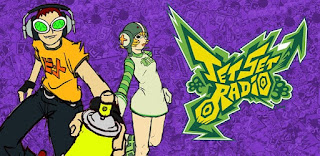
Action Platform Graffiti Rollerblading Game Mega Review: Jet Set Radio


Jet Set Radio is a unique graffiti game developed by the Sega studio Smilebit. It was initially released for the Dreamcast and a high-definition remake by BlitWorks was later released for Android, iOS, PlayStation 3, PlayStation Vita, Windows, and Xbox 360.

The game puts you in the shoes of Beat, the leader of a youth gang known as the GGs. They tag the streets of Tokyo-to, a city plagued by a corrupt police force. The youth gangs are known as the Rudies, who get information about police and Rudie activity from a DJ known as Professor K, who runs a pirate radio station known as Jet Set Radio.

The goal is to spray the graffiti indicated by arrows before time runs out while grinding on rails to gain speed and then jumping up onto higher platforms. Sometimes there are large areas that need graffiti, which is accomplished by spraying while using the thumbstick to follow the arrow prompts. There are also spray cans littered around the levels. Some add one can, some fill up the spray meter, and some refill life.

The game included the ability to draw your own graffiti, which could then be selected to be played in the game. On the original Dreamcast version, graffiti designs could be freely downloaded from the internet and then that downloadable content could also be used in-game.

There are also sections where you need to copy tricks by another Rudie. If you copy all of the tricks successfully, you will get another member of your gang. These characters can then be selected to play. Each has a different level of health and maximum amounts of spray cans that can be carried, so it is a matter of preference in which one will be played.

In most stages, another goal is to avoid the police, who will hang onto you, slow you down, and drain your life meter. Some stages will include the corrupt chief of police, who will shoot at you with his gun. There are also boss battles where you need to spray the backs of rival gang members, and a final boss battle with a mind-controlling supervillain.

The graphics are cell-shaded to appear like a cartoon, which is an effect that was highly regarded at the time, and still looks good today, especially in the high-definition version. The music is comprised of fun tunes in a variety of electronic music styles from chiefly Japanese artists.

The North American Dreamcast version, Jet Grind Radio, added two more Rudies, two levels in a new city named Grind City which are playable in flashbacks, and music by Rob Zombie. The changes were then incorporated into a new Japanese release titled De La Jet Set Radio. This version also included an unlockable secret character. The high-definition version included all of the content from De La Jet Set Radio, including all of the licensed songs.

Jet Set Radio is a fantastic game that blends together action, sports, platforming, and graffiti-spraying game styles and different electronic music genres into a game that is fun and very unique. It popularized the cel-shading cartoon graphic technique and still looks great today. The De La Jet Set Radio release in Japan for the Dreamcast was the most complete version, and luckily that is the version that is used for the high-definition version. I highly recommend trying this game, as it is one of the best video games ever released.

Final Verdict:
5 out of 5