Friday, January 20, 2023

System Review: Evercade


The original portable Evercade was released on May 20, 2020. It was just discontinued last year in favor of the new, as of 2022, portable Evercade EXP. This system can run all of the games that the EXP can, with the exception of the games that are built-in to the EXP. The original Evercade can also run some games that can't be run on the home Evercade VS system due to contract technicalities. It's not as big or as sophisticated as its sister, but it still packs a punch for retro game enthusiasts.

The Evercade systems are video game consoles that run cartridges filled with classic games on retro systems, as well as modern games on retro systems through emulation. In addition, a few of the games are classic-style games ported directly to the Evercade platform. Unlike its emulation-based peers, the games for the console are compilations stored on cartridges.

There are three tiers of cartridges. The first is the red collection titles that contain games meant to run on classic consoles or directly on the Evercade. The second is the purple arcade titles that contain arcade games in their native arcade forms. The third is the blue computer titles that contain games for retro computers. At the time of this writing, there are twenty-eight red collection cartridges, eight purple arcade collection cartridges, and one blue computer collection cartridge.

There are also eighteen Capcom games and five secret unlockable games built into the Evercade EXP as well as fourteen secret unlockable games (including the five from the EXP) built into the Evercade VS. These games, for obvious reasons, aren't compatible with the original Evercade. However, all of the cartridges from all three cartridge categories can be used with the Evercade. That includes Namco Museum Collection 1 and 2, both of which are only accessible, out of the box, on portable systems due to contract technicalities.

There are two drawbacks of the original Evercade when compared to the EXP. The first is that vertically oriented arcade titles can't be played in their native TATE configuration. If you prefer playing your TATE titles vertically rather than centered in the middle of a horizontal screen, the EXP is your best bet as the game can be rotated to play these games in a vertical orientation. The second drawback is the lack of WiFi. This means that, in order to update your system to the latest firmware, you need to download it on a computer and upload it on a USB drive which is then inserted into the Evercade and installed. The VS and EXP do have WiFi support, so these systems can be updated directly on the console.

The Evercade systems are well worth playing as they run classic game compilations on cartridge for reasonable prices. Blaze Entertainment, the creator of the Evercade systems, curates the games so each cartridge has quite a few gems. A few of my favorites, including the Gaelco Arcade collections, contain games from developers of which I hadn't heard about prior to their inclusion on the Evercade.

As the original portable Evercade has been discontinued, the price-conscious might prefer this console as it currently, as of the time of writing, can be picked up for a low price. If you are a Capcom fan or a fan of vertically aligned TATE mode games, the Evercade EXP would be the better choice. For couch potatoes, the home Evercade VS system might be the better choice. The handhelds can be hooked up to television sets through HDMI, but the VS is designed specifically for that purpose with two game cartridge inputs, four USB ports, and two included USB controllers. No matter which console you pick, however, there is a lot of fun to be had.

Final Verdict:
4 out of 5


Thursday, January 19, 2023

Adult Animated Comedy Web Series Episode Review: Camp Camp - Romeo & Juliet II: Love Resurrected


Romeo & Juliet II: Love Resurrected is an episode of Camp Camp primarily focused on Preston Goodplay, the sole Camp Campbell camper in the theater camp. There are also side stories with Max continuing to mess with David, as well as an on-brand love triangle.

Preston wrote a science fiction sequel to Romeo & Juliet and the camp is putting on the play on the stage. Even the series protagonists, Max, Nikki, and Neil, are roped into helping with the play. Neil and Nikki try their best, but Max hilariously does as little emotion as he can with his lines. The reason for this becomes clear when Max steals David's cell phone.

Max's pranks are more memorable than the play, but the threads are woven together well when two unexpected females come to Camp Campbell searching for a boyfriend. The season's background story involving Cameron Campbell pops up, and the way it is resolved is hilarious.

Romeo & Juliet II: Love Resurrected finally formally introduces the magic camp camper shown in the premiere episode. He is best taken in small doses, a fact of which the writing staff was obviously aware. There are several background stories going on behind the play which are pleasingly welded together in a way that is very funny and is executed well. 

Love Resurrected is neither the best episode of the season nor the funniest. However, it is an important episode as it introduces a character that will shown be quite a bit later on. It also has a lot of funny scenes that should please fans.

Final Verdict:
3½ out of 5

Camp Camp Season 1, Episode 6 ReviewCamp Camp Season 1, Episode 8 Review Coming Soon

Wednesday, January 18, 2023

Agent Carter Review

Before she became the co-founder of S.H.I.E.L.D., Agent Carter received a Marvel Studios One-Shot. This was a format for ideas that didn't warrant their own film. They have been used for humor, to fix continuity issues, and as springboards for television series. It's the latter use that Agent Carter falls under, as it acts as both a sequel to Captain America: The First Avenger and as a prequel to the Agent Carter television series.

After the end of World War II, women returned to their status as homemakers. Those who didn't were ridiculed for continuing to work in an all-male environment. Peggy Carter was expected to leave the Strategic Scientific Reserve, however, homemaking was not in her nature. She was a better agent than the men in her office, but they kept getting field work while she was forced to act as a secretary.

When a late-night call comes in, she is the only person in the office. Peggy saw it as an opportunity to prove herself, so, going against regulations she goes out in the field to take care of the mission alone rather than relaying the message to the men in the office.

Haley Atwell was one of the best parts of Captain America: The First Avenger, so it was great to see the story of her hard-hitting heroine continue onward after the apparent death of Captain America. The storyline and fight choreography are top-notch and make the best out of the smaller budget given to the One-Shots. It is no wonder why an Agent Carter television series was greenlit, as this was and still is, one of the best One-Shots ever released.

Final Verdict:
5 out of 5


Marvel Multiverse
Agent Carter Season 1, Episode 4 ReviewX-Men: First Class review

Tuesday, January 17, 2023

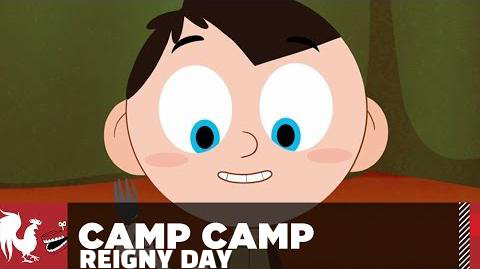
Adult Animated Comedy Web Series Episode Review: Camp Camp - Reigny Day


Camp Camp: "Reigny Day" probably pushes the boundaries more than any other episode in the series. It gives the camp's Adolf Hitler doppelganger an entire episode dedicated to him, throws in a lot of Hitler jokes in the process, and somehow ends up oddly charming.

David is excited about the visit of the camp critic council as he expects to be named camp counselor of the year. He has prepared a surprisingly professional-looking obstacle course as that day's activities to impress the council, but his plans are disrupted when it begins raining. The raining joke about a common idiom had me chuckling each time it came up in the episode.

David, of course, has no idea how to improvise a new activity for the children. As the kids are drawing and Dolph is there for the art camp, he hastily decides to make Dolph camp counselor for the day. This is where the show's allegory of Hitler's actions in World War II comes in. The Rooster Teeth team manages to walk the tightrope and keep it from becoming too offensive as Dolph is presented as friendly and naive. His actions are a weirdly wholesome parallel to the infamous dictator as Dolph is completely oblivious to his actions and just wants to be a good junior camp counselor.

Luckily, the episode doesn't drag, as that would give it more of a chance of being offensive. As it is, the jokes come hard and fast, but the Hitler parallels are depicted as the unknowing actions of a friendly child. Rooster Teeth managed to do the almost unthinkable by making a Hitler parody that is very watchable without becoming too offensive or cringy.

Final Verdict:
4 out of 5

Monday, January 16, 2023

Animated Comedy Television Series Review: DuckTales - Woo-oo!


This review was originally posted on the McMurray Internet Channel website on March 6, 2019.

Disney XD has aired an excellent DuckTales series for the past couple of years. It combines the classic 1987 DuckTales series with elements from the classic Carl Barks and Don Rosa Scrooge comics, and wraps them in the modern style of Disney shows such as Gravity Falls.

Woo-oo was the premiere episode of the show, and it definitely started strong. Donald Duck is worried about his nephews as he goes to interview for a new job, so he drops his nephews off at his Uncle Scrooge’s mansion. There is obvious bad blood between these two, as the boys didn’t even know that Scrooge was their uncle, and Donald and Scrooge haven’t spoken to each other in years.

Once we get to the mansion, we’re treated to an excellent surprise in the presentation of the characters. The classic DuckTales was excellent, but for a show aimed at children, the children on the show were surprisingly un-fleshed out. Huey, Dewey, and Louie didn’t have distinct personalities, and the personality that they were given were those of boy scouts, or junior woodchucks, as the case may be. This time the show takes a cue from the Quack Pack series, and not just because the twins have the voices of pre-teens rather than ducklings. They now have distinct personalities. Louie is mischievous, as his brothers refer to him as the “evil twin”, and he agrees. Dewey is daring and is an adventure seeker. Huey is the only one who retains the junior woodchuck personality, and, probably as a nod to that fact, he is the only twin that wears a baseball cap.

In the classic DuckTales, Webby was much younger than the boys and was scared of the adventures that Scrooge and the boys had and usually stayed home. Here, Webby is around the same age as the boys and resembles Mabel from Gravity Falls in many ways, and not just because the two enjoy grappling hooks. She is strong, resilient, and outgoing.

Mrs. Beakley is also given an overhaul. Before, she had a grandmotherly personality and served as the traditional maid of the mansion. She is still the maid, but now she is super strong and has a no-nonsense personality.

Scrooge also is a bit different, and it’s not only because he’s voiced by the always-awesome David Tennant. He is a bit less grandfatherly than the 1987 series, and is a bit more of a miser, as he was in the classic Scrooge comics. He still cares for his nephews, but he’s a bit less of a family man than he was in the classic DuckTales series.

However, Launchpad is still Launchpad. He’s still a plane-crashing airhead with a heart of gold, and that’s for the best as he was the breakout original character of the classic series.

Beyond the characters, we’re treated to a fun adventure as the characters learn about Scrooge and Donald’s adventuring past. They also reinvigorate Scrooge, who had retired from adventuring. They get to see that he can still fight magical monsters despite his age, and he sees that he cherishes their youthful enthusiasm as they make him want to go on adventures once again.

Plus, in the end, we’re treated to a tease of the return of Scrooge’s archenemy Flintheart Glomgold. In that same tease, we’re also treated to more Donald Duck. His absence is one of the biggest drawbacks of the classic series. Donald is one of Disney’s major six characters, so it always seemed a bit weird that Donald was missing from the classic series, relegated to a few cameos. When I was a kid, the Donald episodes were always among my favorites, so it’s great news that he has a greater presence in the modern DuckTales.

Woo-oo was an excellent introduction to DuckTales, both for new fans, and for fans of the classic series. The fact that the characters are all given distinct personalities even rises it a bit above the classic series. It really is a complete treat for fans, new and old.

Final Verdict:
4½ out of 5

Free Shoot 'Em Up Review: Zeplis


Zeplis is a free shoot 'em-up created by Yasuyuki Suzuki for the Sharp MZ series. It was released in the February 1985 issue of the Japanese computer magazine PiO.

Like most games of its era, Zeplis didn't contain an in-game storyline. However, on Suzuki's website, he outlines the story as taking place in the-then future of 2013. As Earth was about to be invaded by aliens, the Federation Defense Forces, five experimental fighter jets were sent to fight off the force. However, with four of them destroyed, the last jet pilot is the last hope for the human race.

It is a fixed-screen shoot 'em up in the vain of Galaga. Like that game, the goal is to defeat all of the enemies flying in formation. A boss battle is at the end of each stage where the goal is to destroy the mothership before it destroys you. 

A challenging stage follows the regular stages. The goal is to shoot as many of the enemies as possible. If a perfect score is earned, a power-up will be earned. Earning the power-ups for the first two stages will award two extra shots for a total of three.  These extra shots will remain until the game is over.

The game works on the Sharp MZ-80K, MZ-80C, MZ-1200, MZ-700, and MZ-1500. It has the black and white, or black and green graphics of the early MZ models. The graphics are well done, considering its early arcade inspirations as well as the capabilities of the hardware. The keyboard keys used by the game will differ based on the hardware. Early models use the letter keys whereas the later models use the cursor keys.

Like the early arcade shoot 'em-ups Zeplis was based upon, the game is easy to pick up and play and highly replayable. As it's an early computer game, getting the game up and running isn't as easy as playing it due to the fact it is run from the command line. If you have the means to play it, whether on authentic hardware, an emulator, an FPGA system, or the PasocomMini MZ-80C, it could be worth playing.

Final Verdict:

3½ out of 5

Sunday, January 15, 2023

Free Open-Source City-Building Game Mega Review: SimCity/Micropolis

Maxis is well known for its simulation games. The game that started the company was SimCity, the game that popularized the city-building subgenre of simulation games.

The object of the game is to build a functioning city. Residential, commercial, and industrial districts have to be created, as well as either coal or nuclear energy to power them. Public transportation, as well as police and fire departments, need to be built as well. The way these elements have to be placed requires strategy because coal and industrial districts raise pollution. The citizens of the city in the residential districts need these districts at which to shop and work, or else people won't move into the city. Industrial districts raise crime, so police districts need to be placed throughout the city or else people will move out of the city due to high crime. High pollution will also cause people to leave the city.

A finite amount of money is available, so these elements have to be purchased in a fiscally responsible way. At the end of each in-game year, the population will be shown to have grown or shrunk. Negative amounts of growth cause a loss of money. If there isn't enough money to pay them, city functions like police, transportation, and fire department funding will go down. Taxes can be charged to mitigate loss, but if it is raised too high, people will move out of the city.

As the city grows, the citizens request special buildings such as airports, seaports, and gaming stadiums. These are much more expensive than regular buildings and districts, so it will likely be a while before the money is ready to purchase these unless the money has been saved over several years.

There are disasters, both natural and supernatural, that can wreck the city that need your intervention such as earthquakes, fires, floods, monster attacks, nuclear meltdowns, plane crashes, shipwrecks, and tornadoes. These appear at different years throughout the city. Every disaster, plus monster attacks, excluding nuclear meltdowns and shipwrecks, can be let loose at any time by selecting it from the menu. 

The Super Nintendo Entertainment System version is my personal favorite version of the game. The objects to be placed are larger, there's a helper character named after Will Wright, the creator of SimCity, and there are new objects to be placed. These include a house for the mayor, a zoo, a casino, an amusement park, an expo, a police headquarters building, a fire department headquarters building, a big park, a bank, a central railroad station, a landfill, a library, a windmill, and a library.  There are also Nintendo-specific additions and changes. Once the city becomes a megapolis, a Mario statue can be placed. Additionally, the monster attack is changed to an attack by Bowser, King of the Koopa.

The source code and game data for the original SimCity were released as Micropolis, Will Wright's working title for the game. This version has everything from the original SimCity except for the plane crash disaster, which was removed because of September 11, 2001, the date of the terrorist attacks on the World Trade Center and the Pentagon in the United States.

SimCity is an important historical game since it popularized the city-building genre of video games. It is a slow-paced game compared to modern titles, even on the fastest setting, but it is still fun. I recommend playing the Super Nintendo version in an emulator, as you get the Nintendo-added extras and the ability to fast-forward the game to make the years go by less slowly.

Final Verdict:
4½ of 5