Showing posts with label bowling. Show all posts

Friday, October 31, 2025

Open World Action RPG Review: Yakuza Kiwami

Before the release of Yakuza 0, Yakuza was the beginning of Kazuma Kiryu's story. Yakuza 0 proved to be one of the best games in the whole series. With the release of Yakuza Kiwami, which brought the game up to modern standards yet kept the core story intact, the original Yakuza actually holds up quite well.

The game begins in 1995, seven years after the events in Yakuza 0. Kazuma Kiryu, a twenty-seven-year-old member of the Dojima family within the Tojo Clan, has climbed the ranks within the clan. He is just about to become the patriarch of his own family when he takes the blame for the murder of Patriarch Shimano, although he was not the one that killed him.

Ten years later, Kiryu is paroled and he is released from prison. He now has to deal with members of the Tojo clan that want him dead, as well as the usual violent thugs that wander around Tokyo's Kamurocho district. A decade in prison has made his skills rusty, so he has to gain experience so that he can regain his former strength.

In the Kiwami remake of the game, Goro Majima, the Mad Dog of Shimano, vows to help him restore his strength so that he can battle him properly. This is called "Majima Everywhere", and the name is apt since the battles take place all around the city. This is simultaneously both the funniest and the most frustrating part of the remake since Majima will pop up from just about anywhere at any time. The best way to handle this is to keep leveling up, especially health and beast style moves. Defeating Majima will add moves to Kiryu's dragon style. and other than learning moves from Master Komaki, is the only way to do so. Like Yakuza 0, Kiryu can use the aforementioned beast and dragon style move set. Kiryu can also use moves in his brawler and rush styles. Each of these styles can be accessed by pressing a direction on the directional pad.

Kiryu's story picks up steam when he comes across a young girl, Haruka, that is somehow tied to the one billion yen that has been stolen from the Tojo clan. The Kiryu saga of the Yakuza franchise has always been about family, and that is true here as well. Yakuza 0 had Kiryu protecting his adopted father, Shintaro Kazama, and his sworn brother, Akira Nishiyama. Yakuza picks up that trend, as Kiryu does everything he can to protect Haruka, the little girl that ended up in his custody.

In Yakuza Kiwami, the Japanese voices are left in the western versions, but in the original western release of Yakuza for PlayStation 2, the English voices were dubbed by famous voice actors. It pains me to recommend the Japanese voices, as the English cast was amazing. Among others, it included Mark Hamill giving Joker vibes as Majima and Bill Farmer doing his best Sam the Canine Shamus as Detective Date. The English voices are actually really good. It's just the janky script that let them down. Not only is the dialog in the original English PlayStation 2 version clunky. but names of places and people have been shortened or even changed for little reason. To this day, no one but the translator knows why the Florist of Sai was given the name of Kage in English. He certainly never received a given name in the original Japanese version. Thankfully, Yakuza Kiwami has a much less awkward translation with the original names intact.

In the original Yakuza, the minigames were regulated to the UFO catcher, visiting with cabaret club hostesses, hitting baseballs at the batting center, blackjack, pachinko slot, and roulette. Yakuza Kiwami keeps the UFO catcher, batting center, blackjack, and roulette and removes the pachinko slots as well as four of the six hostesses. However, it adds minigames from Yakuza 0, including billiards, bowling. cee-lo, cho-han, darts, a karaoke button-based rhythm game, koi-koi, mahjong, oicho-kabu, Pocket Circuit slot car racing, poker, roulette, and shogi. The Sega game centers in Yakuza Kiwami also contain Battle Bug Beauties: MesuKing,  based on the Catfight Arena from Yakuza 0.

All of the minigames are fun diversions, but the best part of any Yakuza game outside of the main story is the side missions. There are many sidequests, and Yakuza Kiwami thankfully doesn't remove any sidequests from the original. Kiwami also adds a few new ones to tie the game back to Yakuza 0. Like any Yakuza game, some of them can be quite off-the-wall hilarious. There's nothing like the adult baby gangsters seen in later games, but the wackiness the series is known for definitely started here. As with any Yakuza game, the last side mission is an extremely hard fight with a member of the Amon family.

Yakuza is a great game regardless of which game you are playing, even if it is the PlayStation 2 version or the Japan-only Wii U and PlayStation 3 high-definition versions. However, the best way to play is definitely the Kiwami remake. It does remove 2 out of 6 hostesses and the pachislot games, however, it adds 12 minigames, adds three fighting styles, and brings the presentation up to modern standards. In doing so, it restored the original game's status as one of the best games in the series.

Final verdict:

4 out of 5

Yakuza ReviewStreets of Kamurocho Review

Open World Action RPG Review: Yakuza Kiwami 2


The second Yakuza game was bigger than the first, with the addition of a new district, Shinseicho, based on the real-life Shinsekai, as well as including the usual Yakuza series hangout spot, Kamurocho, based on the real-life Kabukicho. In the Yakuza Kiwami 2 remake, the second district was replaced by Sotenbori from Yakuza 0, which is based on the real-life Dotenbori. In the case of both Yakuza 2 and the Yakuza Kiwami 2 remake, in many ways, bigger does indeed mean better.

In this game, Kiryu Kazuma is approached by the fifth chairman of the Tojo Clan, Yukio Terada, who wishes to broker an alliance between the Tojo Clan and the Omi Alliance. After Terada is murdered, Kiryu decides to take on this goal himself, as he was the one who appointed Terada as the fifth chairman. Thus, he places his adopted daughter, Haruka, in the care of the orphanage where they both grew up, and sets out on the dangerous task to broker peace between the two biggest yakuza organizations in Japan.

The story of Yakuza 2, which takes place a year after the events of Yakuza, is often praised as being among the best in the series and within the top two with Yakuza 0. That praise is well deserved, as it is an exciting murder mystery with a lot of twists and turns thrown in. On top of that, the female detective, Kaoru Sayama, whom Kiryu first meets in this game is written superbly. The writers are good at writing for interesting female characters, but they usually are relegated to the women at the cabaret clubs. It is fun to interact with these women, who range from ultra-feminine to tomboyish. However, they rarely have a tough, yet feminine woman who can hold their own in a fight. That's a shame because Yakuza 2 showed that they could do it well. It took over a half a decade, with the release of Yakuza 5, for another tough, feminine woman to appear in a Yakuza game, and over another half a decade for a playable strong, feminine female character to become playable with the release of Yakuza: Like a Dragon.

Another awesome character is the Kansai dragon, Ryuji Goda, who is one of the main villains of the game, as he wants to defeat Kiryu, the Dragon of Dojima, to stake the claim as the only dragon in the yakuza. He is written and performed so well that he became popular with the fans enough to become a playable character in Yakuza: Dead Souls.

As for gameplay, this game is the one that shows its Shenmue lineage the most. Yakuza showed it with quick-time events, fetch quests, and a puzzle near the beginning of the game where Kiryu had to infiltrate the funeral of the third chairman of the Tojo clan. Yakuza 2 has these as well, but it has an actual adventure puzzle near the middle of the game where Kiryu has to interpret clues to open a safe. The puzzle is done very well, and, as a fan of adventure games, I'm happy that it was kept intact in the Yakuza Kiwami 2 remake.

Speaking of the remake, compared to Yakuza Kiwami, the controls are still a bit stiff and there is only one fighting style for Kiryu. In addition, some locations with mini-games are no longer accessible in Yakuza Kiwami 2, such as bowling, pool, and the Club Adam host organization. In addition, with the replacement of Shinseicho for Sotenbori, the Shinseicho minigames have been moved to Kamurocho and Sotenbori or removed entirely. Making up for it, however, some mini-games have been added to the Kiwami remake, including the Majima Construction clan creator and cabaret club management. 

Yakuza Kiwami 2 is an excellent game with multiple locations to visit, well-written and excellently voiced new and returning characters, and a superb plot. Any version is worth playing, from the PlayStation 2 original, the Japanese-only high-definition versions on PlayStation 3 and Wii U, or the Kiwami remake, although I wholeheartedly recommend playing the Yakuza Kiwami 2 remake. Yakuza 2, and by extension, Yakuza Kiwami 2, absolutely deserves its praise as one of the best games in the series, and the remake cements it there, even when compared to later games in the series.

Final verdict:

5 out of 5

Yakuza 2 (HD) ReviewYakuza Kiwami 2: Majima Saga review


Wednesday, April 5, 2023

Motion-Sensing Multi-Sports Video Game: Wii Sports


In 2006, Nintendo released the Wii, a console with a motion-sensing controller that managed to bring in multiple generations of players, from toddlers to the elderly. A big part of the console's success was due to its pack-in game, Wii Sports.

Wii Sports is the perfect game to showcase the ability of the Wii. It contains five sports, baseball, bowling, boxing, golfing, and tennis. Four of these require just the Wii Remote itself, while boxing requires the included Nunchuk accessory.

They all control well and promote motion while playing. Because of this, they became popular in assisted living facilities and nursing homes. The low-cardio sports are the ones that are likely to keep you coming back. Tennis and boxing are also fun, but they are strenuous and, unless you are in excellent health, it is likely they will be too much. Of the remaining three, bowling is the most fun. Golf and baseball have their strengths, but bowling is just a fun time, especially playing with friends. Because it is a low-impact sport by design, bowling is also the sport out of the five that feels most like playing the real thing.

A cute aspect of this game is the inclusion of Miis, the Nintendo player avatars that originated with the Wii. It's fun to design an avatar that resembles yourself and then play Wii Sports with that Mii. I have Miis for each of my family members, and it is a lot of fun to see them on the screen when I'm playing with my family.

Wii Sports was a bonafide system seller that is even fun to play years later. I still occasionally boot up my Wii with Wii Sports to get some cardio in when the weather outside prevents walking or if my chronic conditions flare up. For the latter, Wii Sports is a godsend. The five included games, baseball, bowling, boxing, golfing, and tennis are all fun games that are done well. Motion-sensing games sometimes get maligned by long-time gamers, but when it comes to Wii Sports it is unfounded. The game is a bonafide Nintendo classic.

Final Verdict:
4½ out of 5

Tuesday, February 21, 2023

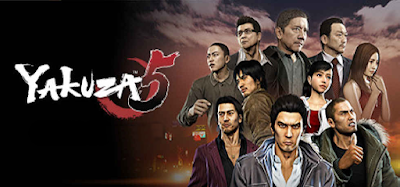
Open World Action RPG Review: Yakuza 5 (Remastered)


Yakuza 5 takes the idea from the previous game in the series, that of additional player characters, and bumps the number up to five, mirroring the game's title. 

The protagonists this time around include three from the previous game, Kiryu Kazuma, Shun Akiyama, and Taiga Saejima, It also includes a new character, the Kineicho nightlife reporter, Tatsuo Shinada. For the first time, the Like a Dragon series has a playable female character, none other than Kiryu's own adopted daughter, Haruka Sawamura. She doesn't fight, instead, she dances and sings her way across Sotenbori on her path to becoming an idol.

The game's plot involves, as always, a plot that involves the Tojo Clan and brings Kiryu reluctantly out of retirement. He does earnestly try to stay retired in this game, though. He is working as a taxi driver in Nagasugai under the pseudonym Taichi Suzuki. As he shares his name with an orphan at the orphanage he managed, I wonder if he chose that name because of him. As he's the one that is a fan of fighting, it's possible that he sees himself in the boy. If that is the case, that's heartwarming and makes me like Kiryu as a character even more.

The events that pull Kiryu from his taxi driving job are definitely strong enough to make Kiryu shed his relative anonymity. The sixth chairman of the Tojo Clan, Daigo Dojima, is missing and the Omi Alliance is believed to have nabbed him. If this was the case, it would bring the Tojo Clan and the Omi Alliance into a full-out war, which could bring collateral damage to civilians, including those that Kiryu cares about most.

The first four main characters are all fighters with their own style. Kiryu and Akiyama retain the style of fighting from the previous game. Kiryu is a good all-around fighter and Akiyama is fast with his feet. Shinada is a great grappler. Saejima thankfully gets an upgrade. While he is still strong as a tank, he no longer moves like one. His quicker moves mean that he's no longer a liability when enemies attack in groups, which happens a lot in the Like a Dragon series.

My favorite storyline and play style is Haruka's. She dances and sings through quick time events, but they are somewhat forgiving in terms of timing and are lots of fun. She also has jobs to do as an idol, including meeting fans and appearing on game shows. The best part about her story is that the animation of Haruka and her competitors is excellent, and is definitely among the series' best. The bonus is that her songs are actually great and definitely could be part of an idol's repertoire.

After Saejima escapes from prison, again, he finds himself in a small village in the mountains and must hunt to get the villagers to warm up to him. This leads to a fun hunting minigame. I never thought that there would be hunting in a Like a Dragon game, or that I would like it. But, it is definitely there and I actually really do enjoy it. It's a shame his exclusive city, Tsukimino, isn't as approachable as the small village due to it having way too many invisible walls. It's annoying, but the always weird and wacky sidequests made me able to ignore them after a while.

I finally see why Saejima is liked by many fans. He was as personable as plywood in the previous game, but he's actually likable here. In some parts, especially when interacting with the villagers in the snowy village, he even comes across as cute. With Haruka's dancing minigames and Saejima's hunting, Yakuza 5 has the most variety of any mainline game in the series up to this point.

Yakuza 5 is my personal favorite. The storyline is interesting, the characters are enjoyable, and Haruka's climb up the idol ladder is a great break from the usual gameplay the series was known for, at least at this point. The only drawback is the major city in Saejima's story has way too many invisible walls. If it weren't for that, the game would be nearly perfect.

Addendum February 22, 2013: I forgot to mention Yakuza 5 Remastered. This version has high-resolution graphics, but unlike previous remastered games, the translation didn't need to be updated. Yakuza 5 was the first game in the series that was translated by Atlus, and they did their usual fantastic job of localization.

Final verdict:
4½ out of 5

Saturday, January 14, 2023

Open World Action RPG Review: Yakuza 4 (Remastered)


Yakuza 4 was the biggest Like a Dragon game up to that point. Like its series placement, there were four playable characters. It manages to juggle the story of all the characters quite well. For the most part, the three new characters were well-written and fun to play as well.

The first playable character is Shun Akiyama, a money lender who grants loans interest-free if the lendee completes a test to prove that they would do anything for the loan. He is brought into the fray when a high-ranking yakuza is murdered on his doorstep. The second playable character is Goro Majima's oath brother, Taiga Saejima, a condemned who tries to escape a maximum-security prison. The third playable character is Masayoshi Tanimura, a police officer that takes bribes but gives them to poor immigrants. He discovers a conspiracy involving people higher up the chain in the Tokyo police department. The final protagonist is the primary Like a Dragon protagonist, the ex-yakuza Kazuma Kiryu, who is brought back into yakuza life when Saejima washes up on the beach in Okinawa that is part of the land of the orphanage run by Kiryu. 

All of the characters have their own moveset. Akiyama has swift kicks, Saejima is strong but slow, Tanimura is a grappler, and Kiryu is an all-around fighter. Akiyama is my favorite as his kicks come fast and plentiful. Saejima is my least favorite. It is great that he is strong enough to lift even heavy motorcycles to use as weapons. It doesn't make up for his shortcomings because he is so slow. He is hard to play with many enemies at once, and that happens often.

The story is entertaining, both the police and the yakuza elements weave together nicely, and all four protagonists tie into the story in memorable ways. I enjoyed Akiyama, Tanimura, and Kiryu's stories a lot. These characters were written and acted well. Saejima, on the other hand, wasn't as enjoyable. He's one of the most popular characters of the series, and he does come into his own later on, to a point. But here, with the exception of an emotional moment at the coliseum, he has the personality of a dried turnip. His story is well-written, with the exception of his ending, which I didn't feel that he earned. It's a shame Ryu Ga Gotaku didn't have playable female characters at the time this game was created, as his sister had much more personality and her story was much more memorable.

Like all games in the series, the sidequests contained some of the most memorable parts of the game, because they can be really crazy. The hilarious revelations, which are moments where the characters take pictures of silly moments and use them as inspirations for their moves, return here. Saejima did get a memorable moment here, as he doesn't have a phone so he gets inspiration by quickly carving scenes out of blocks of wood.

The story of Yakuza 4 was a welcome rebound from the disappointment of Yakuza 3. The story of the four characters are woven into the story well. Three out of four of the characters are fun to play and their stories are satisfying. The game is let down by Saejima, whose chapters feel like a slog since he's slow and lacks personality. It's worth playing for the other three, but Saejima is just a drag on the otherwise brilliant game.

Final Verdict:
3½ out of 5

Wednesday, August 10, 2022

Open World Action RPG Review: Yakuza 2 (HD)

The second Yakuza game was bigger than the first, with the addition of a new district, Shinseicho, based on the real-life Shinsekai, as well as including the usual Yakuza series hangout spot, Kamurocho, based on the real-life Kabukicho. In the case of Yakuza 2, in many ways, bigger does indeed mean better.

In this game, Kiryu Kazuma is approached by the fifth chairman of the Tojo Clan, Yukio Terada, who wishes to broker an alliance between the Tojo Clan and the Omi Alliance. After Terada is murdered, Kiryu decides to take on this goal himself, as he was the one who appointed Terada as the fifth chairman. Thus, he places his adopted daughter, Haruka, in the care of the orphanage where they both grew up, and sets out on the dangerous task to broker peace between the two biggest yakuza organizations in Japan.

The story of Yakuza 2, which takes place a year after the events of Yakuza, is often praised as being among the best in the series and within the top two with Yakuza 0. That praise is well deserved, as it is an exciting murder mystery with a lot of twists and turns thrown in. On top of that, the female detective, Kaoru Sayama, whom Kiryu first meets in this game is written superbly. The writers are good at writing for interesting female characters, but they usually are relegated to the women at the cabaret clubs. It is fun to interact with these women, who range from ultra-feminine to tomboyish. However, they rarely have a tough, yet feminine woman who can hold their own in a fight. That's a shame because Yakuza 2 showed that they could do it well. It took over a half a decade, with the release of Yakuza 5, for another tough, feminine woman to appear in a Yakuza game, and over another half a decade for a playable strong, feminine female character to become playable with the release of Yakuza: Like a Dragon.

Another awesome character is the Kansai dragon, Ryuji Goda, who is one of the main villains of the game, as he wants to defeat Kiryu, the Dragon of Dojima, to stake the claim as the only dragon in the yakuza. He is written and performed so well that he became popular with the fans enough to become a playable character in Yakuza: Dead Souls.

As for gameplay, this game is the one that shows its Shenmue lineage the most. Yakuza showed it with quick-time events, fetch quests, and a puzzle near the beginning of the game where Kiryu had to infiltrate the funeral of the third chairman of the Tojo clan. Yakuza 2 has these as well, but it has an actual adventure puzzle near the middle of the game where Kiryu has to interpret clues to open a safe. as a fan of adventure games, I'm happy that the puzzle is done very well.

The controls are a bit stiff, and, as this is only the second game in the series, there is only one fighting style for Kiryu. Yakuza 2 includes some locations with mini-games, such as bowling, pool, and the Club Adam host organization.

Yakuza 2 is an excellent game with multiple locations to visit, well-written and excellently voiced new and returning characters, and a superb plot. Any version is worth playing, from the PlayStation 2 original, or the Japanese-only high-definition versions on PlayStation 3 and Wii U. Yakuza 2 absolutely deserves its praise as one of the best games in the series, and the remake cements it there, even when compared to later games in the series.

Final verdict:

5 out of 5

Streets of Kamurocho ReviewYakuza Kiwami 2 review

Tuesday, August 2, 2022

Open World Action RPG Review: Yakuza 3


Update November 18, 2025: After writing this review, jurxd released Yakuza 3 Restored. This patch brings the remastered version as close to the original release as possible, restoring the licensed music and removed sidequests and includes the AnswerxAnswer minigame in international versions for the first time.

Yakuza 3 had big shoes to fill as a follow-up to the excellent Yakuza 2, which was bigger than the first, with more areas to explore, well-written characters, and one of the best stories of the series. Yakuza 3 manages to be a fun game that does improve upon the second game in some aspects but falls short in others.

Taking the series' theme of family to the extreme, Yakuza 3 takes place two years after the previous game wherein Kiryu and his adopted daughter Haruka live in an orphanage that Kiryu manages. Morning Glory orphanage is located on a beach in Downtown Ryukyu, Okinawa. It is named for the Ryukyu Archipelago, of which Okinawa is a part, and is based on the real-world Kokusai Dori. As is the case with every Yakuza game, Kiryu also travels through Kamurochō, Tokyo, based on the real-world Kabukichō.

The story centers around the land in Okinawa, which has political bills in the Japanese parliament that would either build a resort or a military base with high-tech weapons supplied by the United States. Morning Glory orphanage is on part of that land, and Kiryu refuses to let it go, as he prioritizes the children that live there over anything else. Kiryu soon finds himself in the middle of a conspiracy once two people are shot in order to obtain the deed to the land. 

The returning characters are portrayed true to their character, and the actors are top-notch as always. The storylines of the new characters are also handled well, and the actors for these characters also do a fine job. The game also has a character speaking English. His voice is wooden at first, like many Sega games with English-speaking characters, during and before the release of this game in 2009. He was meant to be emotionless, but his performance felt a bit forced during his stoic scenes. However, once the character was allowed to emote, his performance was much more enjoyable. The only character storyline that fell flat for me was the one involved in the surprise reveal. The reason for his appearance in the game was convoluted but did make some sense, in a topsy-turvy kind of way. It seemed a bit forced, however, especially since he was never mentioned before or after this game.

The brawling parts still feel a bit stiff compared to later games, but they suffice once you get used to them. The most intriguing part of the game is how it has many different types of gameplay the game employs, and how they are used in future Ryu Ga Gotoku Studio games. In this way, Yakuza 3 feels like a testing ground for new ideas. It is the first game that allowed Kiryu to run in order to catch suspects. This would be used in future Yakuza games and featured prominently, with improvements, in Judgment. One sidequest also had the detective adventure style of gameplay that would feature extensively in all games in the Judgment series. Kiryu trailed people, interviewed suspects, and obtained evidence working on a murder case. It also had a series of sidequests where Kiryu tracked down assassins to try to convince them to go legit. This bounty-hunting system was later used in Fist of the North Star: Lost Paradise.

The remastered version of the game is by far the best way to play, as many sidequests were cut from the original international version of the game. The sidequests were restored in this game, except for those that made fun of a transgender character. With worldwide moral standards being quite different a decade after its original 2009 release, it makes sense that this one was removed in the remaster in all territories. The storyline in question has Kiryu calling the character "it" and, as such, is quite cruel. Thus, the removal is, in my opinion, no loss at all. The only other removal, other than some incidental music that was changed for licensing reasons, is the AnswerxAnswer arcade game. As this would require extensive translation and localization for the questions asked, this arcade game is removed in the original release outside of Japan as well as in the remastered version in all territories. 

The sidequests are fun and are sometimes quite funny. Also, this is the game that introduced revelations, where Kiryu will take a picture of actions performed by the people in Kamurocho, giving him inspiration for new fighting moves. The actions performed by these people are so random, wacky, and off-the-wall, that they are often laugh-out-loud funny.

Yakuza 3 is very fun, but it is a touch flawed. The sidequests are among the best parts of the game. Plus, the remastered version restores most of those that were cut from the original international releases. The only part of the sidequests that was cut compared to the original was a storyline making fun of a transgender person. As I am against bullying, I commend Ryu Ga Gotaku Studio for removing that. As for the main storyline, it is interesting, with its espionage-type of storytelling. However, it is let down a bit by the fact that the reason that the surprise character appears in the game is convoluted and contrived. Other than this part though, the story is interesting and the main villains are interesting. 

The opponent that is part of the yakuza is the most compelling part of the game. The game goes to great lengths to show his life and how he got to the point he turned into a villain. With this amount of character building, he is a worthy Yakuza villain, right up there with Akira Nishikiyama in the original Yakuza, and Ryuji Goda in Yakuza 2. If it weren't for the forced surprise character, the story would also be up there with those two games. As it stands, it is like a lot of its sidequests in that it feels like a testing ground for ideas, but this particular one didn't quite stick the landing. It's still an excellent game, however, despite its flaws, and I do recommend playing it.

Final Verdict:
3½ out of 5

Yakuza Kiwami 2: Majima Saga ReviewYakuza 4 (Remastered) review

Sunday, July 31, 2022

Unlockable Open World Action RPG Review - Yakuza Kiwami 2: Majima Saga

Included with Yakuza Kiwami 2 was a short side story about Goro Majima. It was quick, but it was fun and it surprisingly added content to the main game while tying things back to the excellent Yakuza 0.

The three chapters of the Majima Saga are unlocked while progressing through the story of the main game. There is also an option to send cash to Kiryu for the main game in a much easier way than Yakuza 0. This time you just simply send the cash through any ATM. Defeating enemies here doesn't actually yield cash, though the stronger enemies will give Majima silver, gold, or platinum plates. These can be sold in the pawn shops for cash, which can then be sent to Kiryu or spent on items or food.

In the Majima Saga, it is better to stock up on health items rather than food, since it is impossible to eat beyond your stomach gauge. Majima is also limited to one move set here, although it's a doozy. You get full access to Majima's Mad Dog move set from Yakuza 0, as Majima doesn't gain experience. This is plenty, as Majima uses his knife with lightning-quick speed.

The combat is satisfying, but the main draw of the Majima Saga is its side story. It fills in the blanks within the story as to why Majima left the Tojo Clan. It's also the perfect game to have a Majima side story within it, since Ryu Ga Gotaku Studio, and Japanese culture in general, features romanticized yakuza that have morals and have left the yakuza life behind them. This is true of Kiryu and Ichiban Kasuga, and it is also true of Majima in Yakuza 0. Since Yakuza 2 is the only mainline Yakuza game where Majima is working as the head of Majima Construction rather than running a Tojo family, a Majima sidequest is a perfect fit.

The parts of the Majima Saga that showed the forming of Majima Construction were fun and were actually laugh-out funny at parts. However, the best parts are the scenes that tie the game into Yakuza 0. I wasn't expecting an emotional story out of this, so it definitely surprised me, in a good way. Hidenari Ugaki is always excellent as Majima, and he really pulled out the stops to give Majima the full range of emotions here.

Majima Saga is short, but sweet. It's a story that fills in the blanks of not only Yakuza 2, but Yakuza 0 as well. Any fan of the Yakuza franchise should check out, as its content more than makes up for its short length. It isn't the main reason to play Yakuza Kiwami 2, of course. However, if you do have Yakuza Kiwami 2, or you are planning to pick it up, you owe it to yourself to play the Majima Saga.